Fire-Damaged Furniture Disposal in Dallas, TX
Synthetic foams, polyurethane padding, and blended textiles inside sofas, mattresses, and upholstered chairs combust rapidly during a fire, absorbing acrid chemical odors and dense carbon soot. Once synthetic foam cores have been scorched, melted, or deeply saturated with corrosive soot and firefighting water, they cannot be safely restored. Leaving charred, odor-filled furniture inside a property keeps indoor air toxic, hinders structural drying, and poses severe biohazard and chemical contamination risks.
Our Dallas-based restoration teams provide systematic disposal of fire-damaged furniture and non-salvageable interior items across all 51 Dallas ZIP codes. We handle heavy, awkward item extraction using professional two-person carry teams, protect unburned hallways and doorways from transit damage, and generate detailed photographic inventory logs for your insurance proof-of-loss documentation.
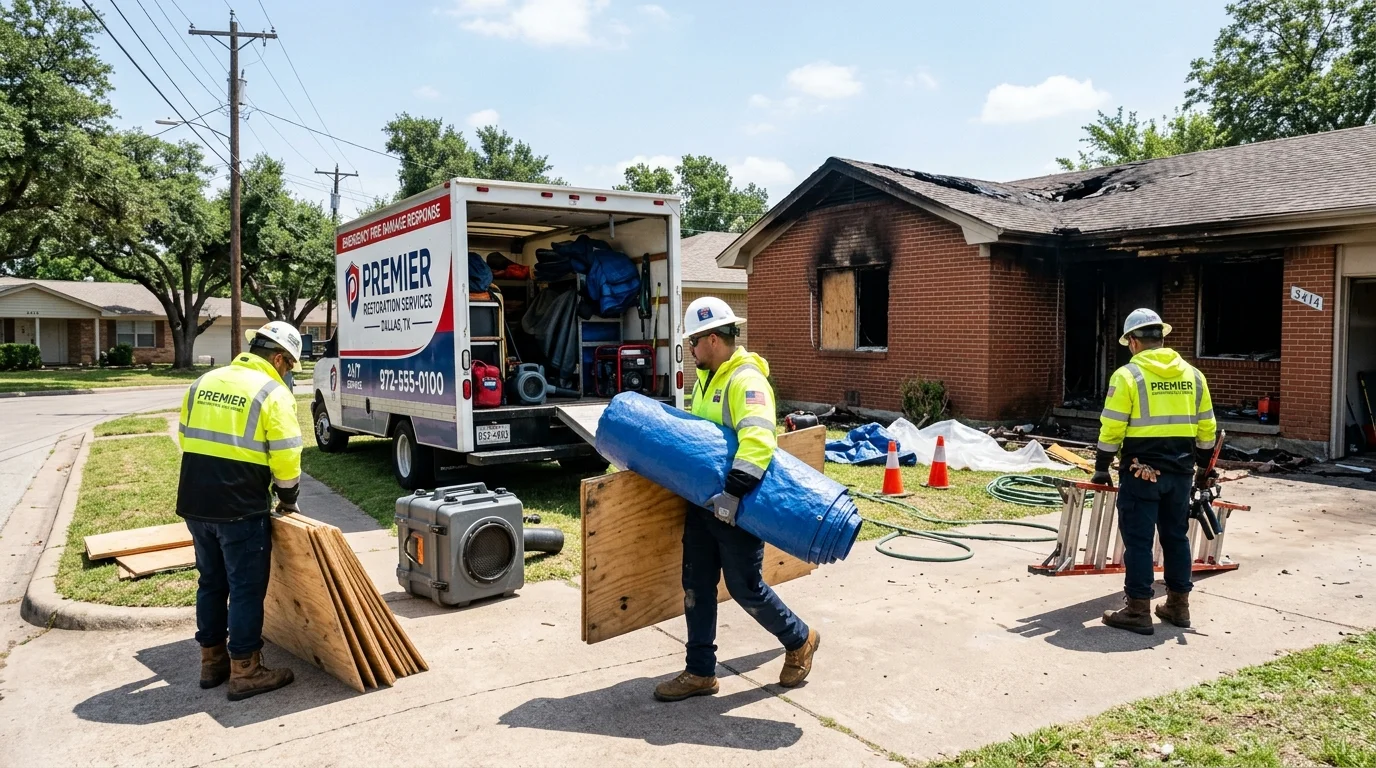
Dallas Debris & Cleanup Dispatch
Heavy-duty equipment & roll-off container mobilization across all 51 Dallas ZIP codes.
What Does Fire-Damaged Furniture Disposal Entail?
Discarding burned furniture requires careful coordination to ensure items are documented for insurance compensation before removal and transported lawfully under municipal solid waste guidelines:
Pre-Disposal Insurance Documentation
Before any furniture item leaves your property, our team photographs the piece from multiple angles, records make, model, and serial numbers (where available), and documents the exact nature of the fire and water damage.
Non-Salvageable Total Loss Confirmation
We coordinate with your insurance adjuster to verify that the item is deemed a total loss and authorized for disposal rather than restoration.
Controlled Two-Person Extraction
Heavy sofabeds, blackened dining tables, soaked king-size mattresses, and scorched appliances are navigated carefully through narrow hallways and stairwells without scratching remaining trim or scraping walls.
Protective Pathway Wrapping
Items covered in flaky carbon soot are wrapped in protective polyethylene sheeting before being carried through unburned rooms to prevent cross-contaminating clean flooring and carpets.
Compliant Hauling & Municipal Disposal
Discarded furniture is loaded into commercial disposal vehicles or staged roll-off containers and transported to authorized North Texas waste processing centers.
Furniture Disposal vs. Contents Restoration
Understanding the boundary between disposing of ruined furniture and restoring salvageable personal belongings prevents accidental loss of valued possessions:
Furniture Disposal (Scope of This Page)
Applies to severely burned, melted, or waterlogged total-loss furnishings.
Focuses on polyurethane foam sectionals, soaked mattresses, particleboard desks, and ruined appliances.
Provides photographic proof of loss and haul-off to licensed disposal centers.
Contents Restoration (Block 11 Specialty Scope)
Applies to salvageable personal property, heirlooms, fine art, leather, and solid hardwoods.
Involves barcode digital tracking, pack-out, climate-controlled vault storage, and ultrasonic cleaning.
Restores items to pre-loss condition rather than discarding them.
The Hazards of Keeping Burned Furniture in Your Home
Keeping fire-damaged upholstered furniture inside your Dallas home creates ongoing health and safety hazards:
Continuous Toxic Gas Off-Gassing
Burnt polyurethane upholstery foam and flame-retardant chemicals release volatile organic compounds, formaldehyde, and toxic dioxins for months following a fire.
Moisture Trapping & Rapid Mold Colonization
Saturated mattresses, overstuffed recliners, and box springs absorb tens of gallons of suppression water. Their dense internal batting remains wet for weeks, fostering aggressive mold and bacterial colonies within 48 hours.
Secondary Soot Staining
Every time someone brushes against or moves an unwrapped burned armchair or credenza, oily black soot transfers onto clothing, adjacent walls, and clean flooring.
Structural Obstruction
Bulky ruined furniture blocks access for drying air movers, dehumidifiers, and demolition crews working to stabilize compromised subfloors and wall framing.
Frequently Asked Questions
Can my insurance adjuster require me to keep burned furniture until they inspect it?
Insurance adjusters must inspect damaged personal property before authorizing disposal. However, if burned furniture presents an active biohazard or structural obstruction, our comprehensive photographic logs, serial number records, and detailed descriptions satisfy carrier verification requirements, allowing safe removal.
How do you protect my doorways and floors when moving heavy burned furniture?
Our crews install heavy floor protection (such as neoprene runners and Ram Board) along all transit pathways and pad door frames. Furthermore, soot-covered items are shrink-wrapped or poly-bagged before transit so that soot and ash cannot rub off onto clean walls.
What happens to appliances containing Freon or refrigerants?
Refrigerators, freezers, and air conditioners cannot be dumped in standard landfills under EPA Section 608 and Texas state law. Our certified technicians recover all refrigerants lawfully before routing metallic appliance shells to licensed metal recyclers.
Are mattresses and carpets ever salvageable after a fire?
Mattresses and carpet padding that have absorbed water and smoke cannot be safely restored. The internal cellular structure of synthetic foam traps smoke chemicals permanently and provides a breeding ground for mold and bacteria, making complete disposal the only medically safe option.
Related Debris, Ash & Cleanup Solutions
Overview of comprehensive post-fire cleanup services in Dallas.
Bulk extraction of collapsed drywall, insulation, and fire rubble.
Heavy rubble transport, roll-off dumpsters, and city permits.
Specialized cleaning and vault storage for salvageable personal belongings.
Available Across All 51 Dallas ZIP Codes
Our emergency response and restoration specialists deploy 24/7 across every Dallas County neighborhood. Select your local district below for localized response details:
Fire Recovery & Technical Insights
What to Do in the First 24 Hours After a House Fire
Critical safety, insurance notification, and board-up steps once fire officials release the scene.
Understanding Smoke and Soot Types: Wet, Dry & Protein
Why household cleaning smears acidic soot and how chemical counteractants stop etching.
Navigating Fire Damage Insurance Claims
How Xactimate line-item estimates, ACV vs RCV, and Texas building ordinance coverage work.