Attic Fire Damage Restoration in Dallas, TX
Attics serve as the thermal and ventilation buffer for the entire structure. Because heat rises rapidly through the stack effect during a structure fire, attics endure the highest concentrations of superheated gas, corrosive soot particulates, and toxic smoke odors. Even when flames originate on lower levels, hot smoke travels upward through plumbing pipe chases, electrical conduits, recessed light fixtures, and wall cavities, flooding the attic space. Fiberglass batt and blown cellulose insulation act like giant filters, absorbing toxic volatile organic compounds (VOCs) and hazardous combustion byproducts that will contaminate indoor living air for years if not completely removed.
Our Dallas attic restoration team specializes in deep forensic decontamination, charred timber blast cleaning, insulation extraction, and code-compliant re-insulation across Dallas County. Operating under licensed Texas General Contractor supervision, we deploy trailer-mounted HEPA vacuum systems, cryogenic dry ice blasting, pigmented shellac odor-barrier priming, and blown-in R-38 thermal insulation meeting Dallas Energy Conservation Code standards.
Dallas Master Roofing & Attic Restoration Desk
Licensed roofing contractors & attic decontamination specialists deploying across Dallas County.
Why Fire-Contaminated Attic Insulation Must Be Replaced
Fire-damaged insulation must be completely extracted for critical health and energy reasons:
Massive Toxic Chemical Reservoir
Insulation fibers absorb toxic polycyclic aromatic hydrocarbons (PAHs) and acidic soot. In Dallas summer attic heat (140°F–160°F), these leach into living areas.
Hidden Moisture & Mold Colonies
Firefighting water saturates insulation from above. Wet cellulose and fiberglass trap water against ceiling drywall, promoting rapid toxic black mold growth.
Loss of Thermal R-Value
Water and dense soot compaction collapse microscopic air pockets, permanently destroying insulating value and causing extreme utility bill spikes.
Concealment of Structural Char
Contaminated insulation hides ceiling joists, bottom truss chords, and electrical boxes, preventing structural engineers from inspecting char depth.
The Four-Stage Attic Restoration Protocol
Our attic decontamination methodology guarantees clean framing and fresh indoor air:
Exterior HEPA Vacuuming & Cryogenic Dry Ice Blasting
Technicians run 6-inch suction hoses into the attic connected to heavy-duty trailer-mounted vacuum extractors parked outside, ensuring zero dust enters living quarters.
Cryogenic dry ice blasting (-109°F CO2 pellets) cleans all charred rafters, truss chords, and decking undersides without generating wet wastewater or chemical fumes.
Shellac Odor Barrier & Code R-38 Blown-In Insulation
Two complete coats of white pigmented shellac primer (Zinsser B-I-N) permanently lock in microscopic smoke molecules on all exposed attic timber.
We blow in premium virgin fiberglass or borate-treated cellulose insulation to an R-38 depth (13 to 14 inches) meeting the 2021 IECC Climate Zone 3 standard.
Frequently Asked Questions
What is dry ice blasting, and why is it preferred in attics?
Dry ice blasting uses tiny pellets of recycled frozen carbon dioxide (CO2) blasted at supersonic speeds. Upon impact with charred wood, the dry ice instantly sublimates into harmless gas, lifting soot and carbonized wood without generating wastewater, chemical fumes, or abrasive sand grit. It is the gold standard for attic timber cleaning.
Does attic insulation removal require access through my living rooms?
Our technicians utilize heavy-duty plastic containment tunnels and zippered dust barriers around attic access hatches. The high-volume vacuum hose runs directly from the attic through an exterior window or gable vent to our recovery trailer parked outside, preventing dirty insulation from passing through your living areas.
What R-value is required for attic insulation in Dallas?
Under the City of Dallas Energy Conservation Code (2021 IECC Climate Zone 3), residential attic insulation must achieve a minimum rating of R-38. Upgrading to R-38 significantly lowers summer cooling costs in North Texas's extreme climate.
How do you treat electrical wiring that was covered by burned attic insulation?
Before re-insulating, a licensed master electrician inspects all attic branch wiring, NM cables (Romex), junction boxes, and recessed lighting fixtures for heat-melted insulation or thermal degradation, replacing any compromised runs and securing City of Dallas electrical permits.
Related Roof & Attic Restoration Solutions
Decontaminating soot from roof decking undersides and vents.
Targeted repairs for shingle burns, ridge vents, and flashings.
Full tear-off and whole-roof reconstruction after severe fires.
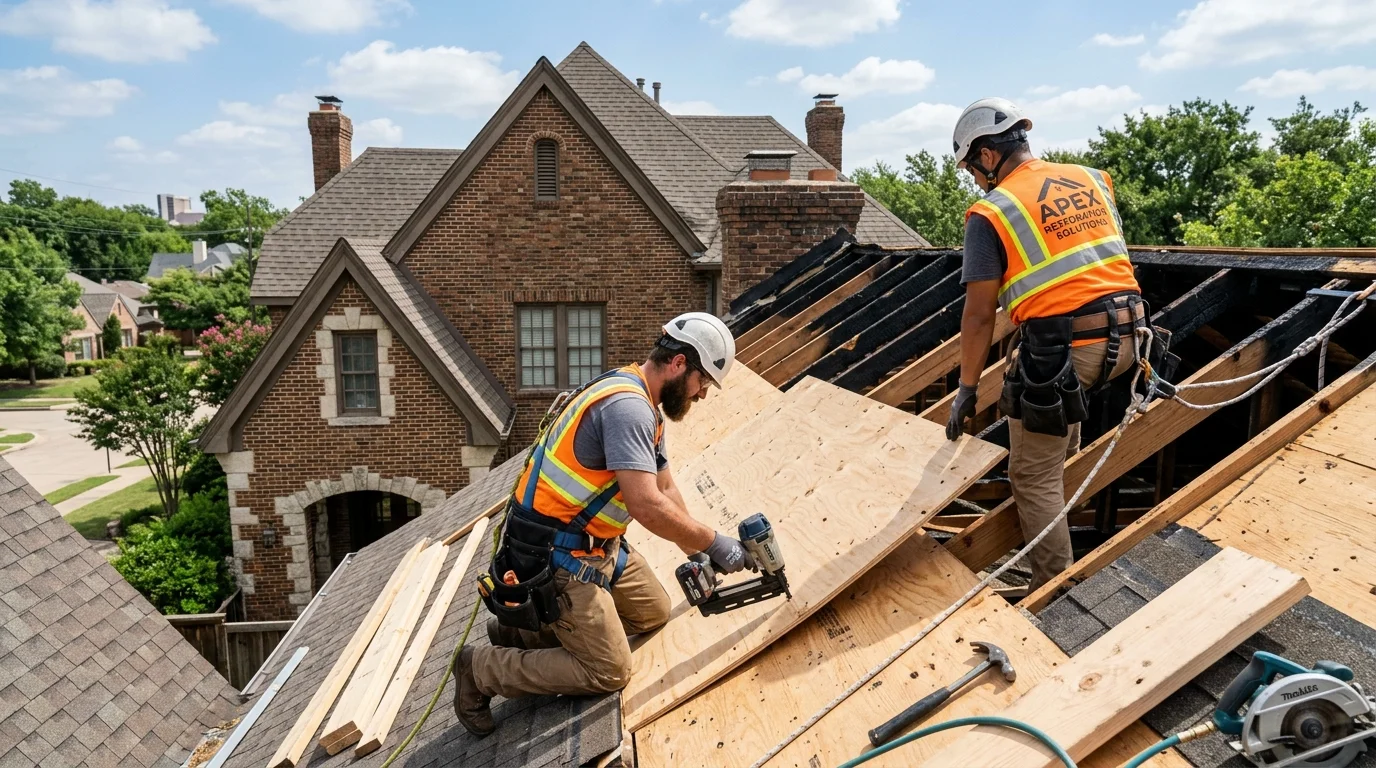
Structural CDX plywood and OSB sheathing replacement.
Available Across All 51 Dallas ZIP Codes
Our emergency response and restoration specialists deploy 24/7 across every Dallas County neighborhood. Select your local district below for localized response details:
Fire Recovery & Technical Insights
What to Do in the First 24 Hours After a House Fire
Critical safety, insurance notification, and board-up steps once fire officials release the scene.
Understanding Smoke and Soot Types: Wet, Dry & Protein
Why household cleaning smears acidic soot and how chemical counteractants stop etching.
Navigating Fire Damage Insurance Claims
How Xactimate line-item estimates, ACV vs RCV, and Texas building ordinance coverage work.