Smoke Damage Treatment in Dallas, TX
Smoke is not merely a nuisance odor—it is a pressurized, aerosolized mixture of microscopic carbon particles, toxic chemicals, acidic vapors, and vaporized synthetic materials. As smoke cools, it condenses onto walls, windows, ceilings, and interior trim, forming a corrosive chemical film that immediately begins reacting with building materials. Without professional chemical treatment, acidic smoke compounds permanently discolor paint, pit chrome and brass fixtures, and leave indelible stains across Dallas homes and businesses.
Our Dallas-based restoration technicians provide specialized smoke damage treatment across all 51 Dallas ZIP codes. We utilize multi-stage chemical decontamination protocols designed to halt acid corrosion, lift stubborn smoke films, and restore painted walls, architectural trim, and finished cabinetry to their pre-loss condition without requiring premature structural replacement.
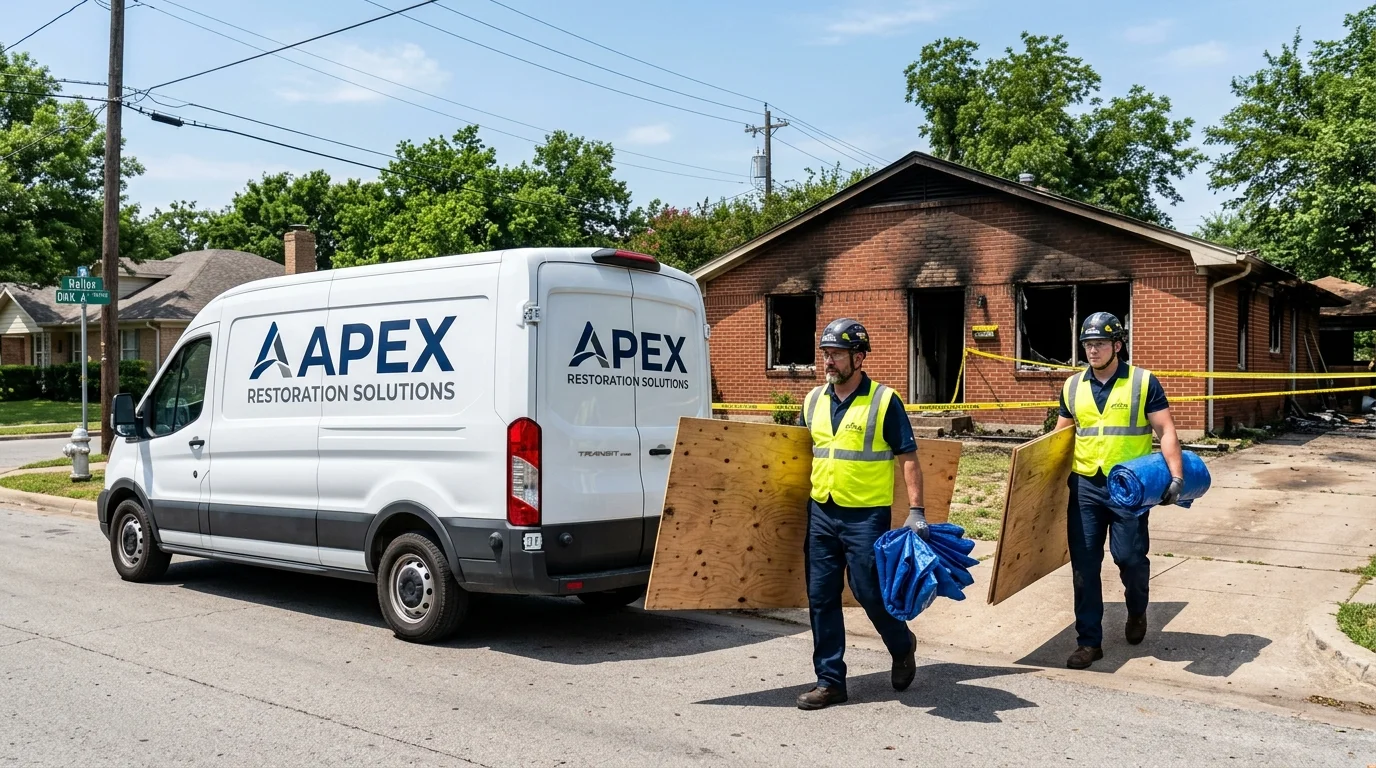
Dallas Smoke & Odor Neutralization Desk
IICRC Master Fire & Smoke specialists deployed with thermal fogging & hydroxyl systems.
What Does Professional Smoke Damage Treatment Involve?
Treating smoke-damaged interiors requires a precise balance of chemical science and controlled mechanical cleaning techniques:
Surface Chemical Testing
Technicians test affected surfaces with specialized diagnostic wipes to identify the specific type of combustion residue present and select compatible counteracting cleaners.
Dry Chemical Sponge Extraction
Before introducing any liquids, crews wipe surfaces with vulcanized natural rubber sponges that draw dry soot particles into their cellular matrix without smearing.
Alkaline Counteracting Washes
Because smoke residues are typically acidic (pH 3 to 5), our technicians apply balanced alkaline cleaning solutions (pH 8 to 10) to neutralize acid compounds and break the chemical bond.
Precision Surface Rinsing & Neutralization
Treated surfaces are meticulously rinsed with neutralizing agents and towel-dried to prevent moisture absorption into drywall and wood fibers.
Ultrasonic Immersion Cleaning
Removable items such as window blinds, light fixtures, and hardware are decontaminated in ultrasonic cavitation tanks that remove microscopic soot from intricate crevices.
Encapsulating Primer Applications
For deeply stained or odor-permeated framing timber, technicians apply pigmented shellac or solvent-based encapsulating sealants to lock in sub-surface compounds.
Dedicated Smoke Damage Sub-Services
Explore our specialized smoke damage sub-services across Dallas County:
Smoke Residue Removal
Dry-sponge extraction targeting loose, oily, and synthetic residues before wet cleaning.
Prevents moisture-induced smearing and paint pore saturation.
Smoke Stain Removal
Advanced stain-lifting chemistry for stubborn yellowing, carbon ghosting, and chemical discoloration.
Specially formulated for painted drywall, brick fireplaces, and finished woodwork.
Smoke Damage Restoration
Turnkey whole-room cosmetic and structural surface recovery.
Coordinates surface decontamination, atmospheric deodorization, and encapsulating sealants.
Frequently Asked Questions
Can painted drywall be saved after severe smoke damage, or must it be replaced?
In most cases, painted drywall can be completely restored without replacement. If the drywall core has not been structurally compromised by firefighting water or direct flame, professional dry sponging followed by an alkaline wash and an odor-blocking primer restores the wall to pre-loss condition.
Why do smoke stains keep bleeding through my fresh coats of paint?
Standard latex primers and paints are water-permeable; they allow acidic smoke oils trapped in the drywall paper to dissolve and migrate to the surface. Professional treatment requires applying a specialized solvent-based or shellac-based encapsulating primer that forms an impenetrable chemical barrier.
How quickly should smoke damage treatment begin following a fire?
Treatment should begin within 24 to 48 hours after Dallas Fire-Rescue releases the property. Rapid intervention stops acid etching on glass, metals, and stone, often saving thousands of dollars in permanent fixture replacements.
Does your smoke damage treatment process remove smoke odors from furniture and carpets?
Yes. Our comprehensive smoke treatment protocols include deep surface washing, thermal fogging, and industrial hydroxyl air treatment to neutralize smoke odors in carpet fibers, upholstered furnishings, and architectural materials.
Related Smoke, Soot & Odor Solutions
Dry chemical sponge extraction preventing soot smearing.
Alkaline stain-lifting for drywall, ceilings, and brick.
Turnkey whole-room cosmetic and surface recovery.
Complete overview of smoke, soot, and odor solutions in Dallas.
Available Across All 51 Dallas ZIP Codes
Our emergency response and restoration specialists deploy 24/7 across every Dallas County neighborhood. Select your local district below for localized response details:
Fire Recovery & Technical Insights
What to Do in the First 24 Hours After a House Fire
Critical safety, insurance notification, and board-up steps once fire officials release the scene.
Understanding Smoke and Soot Types: Wet, Dry & Protein
Why household cleaning smears acidic soot and how chemical counteractants stop etching.
Navigating Fire Damage Insurance Claims
How Xactimate line-item estimates, ACV vs RCV, and Texas building ordinance coverage work.