Immediate Fire Damage Response in Dallas, Texas
When local fire officials finish their work, property protection becomes the property owner's urgent responsibility. Apex Restoration Solutions provides fast, professional on-scene fire damage response throughout Dallas, Texas. Our crew mobilizes directly to your location to secure compromised structures, seal exterior breaches, and stop further property destruction before secondary damage takes hold.
Once Dallas Fire-Rescue (DFR) hands control of the property back to you, the building faces critical threats from weather, water intrusion, trespassers, and structural instability. We arrive with the heavy-duty materials, framing equipment, and protective barriers required to stabilize residential and commercial buildings across all Dallas ZIP codes.
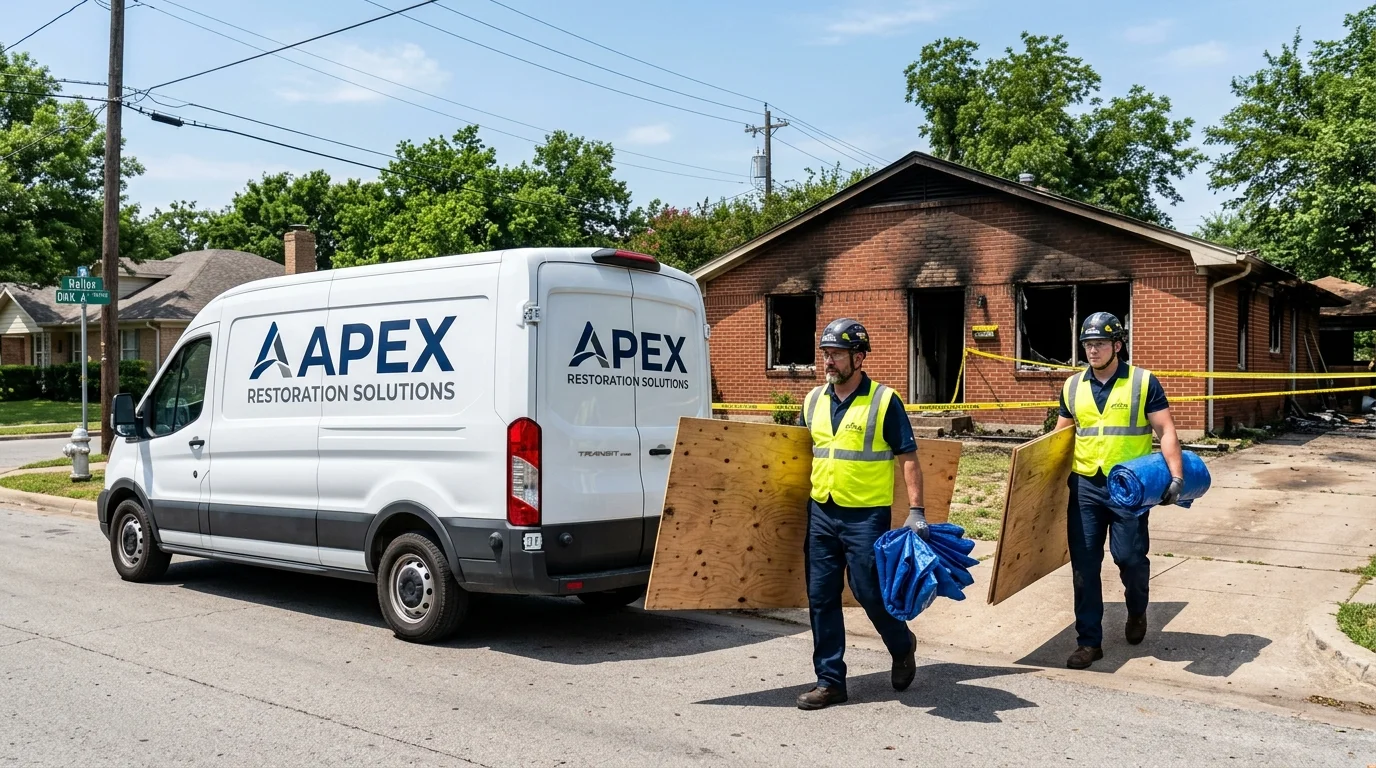
Dallas Rapid Field Dispatch
On-scene crew deployment across all 51 Dallas ZIP codes.
What Is an Immediate Fire Damage Response Service?
An immediate fire damage response service stabilizes and protects a burned building right after first responders clear the scene. This initial response focuses strictly on site protection, safety containment, and structural stabilization rather than permanent repairs or cosmetic cleanup. Crews secure blown-out windows, cover roof holes with heavy-duty tarps, brace weakened exterior entries, and establish a secure perimeter around the property.
Weather Exposure
Sudden North Texas thunderstorms can soak exposed framing, insulation, and remaining interior furnishings.
Illegal Entry
Breached doors and windows invite theft, unauthorized entry, and municipal code citations.
Structural Hazards
Fire-weakened walls and loose roof decking pose serious collapse risks to anyone near the site.
Critical Actions Taken During the First Hours on Site
1. Rapid Structural and Hazard Assessment
Before any crew member steps past the threshold, our lead technician inspects exterior load-bearing assemblies, rooflines, and overhead hazards. We identify sagging trusses, charred floor joists, and loose masonry. This step ensures that all securing and stabilization work proceeds safely without risking structural shifting.
2. Immediate Opening Enclosure (Board-Up)
Openings created by flames, extreme heat, or firefighter ventilation must be sealed right away. We install exterior-grade, half-inch CDX plywood over every broken window, door frame, and breached wall. Boards are secured directly into structural framing rather than weak window trims, preventing intruders from prying them loose.
3. Overhead Weather Defense (Roof Tarping)
Fire suppression tactics often require cutting ventilation holes into roof decking. We install commercial-grade, UV-resistant tarps over all roof punctures, burned-through shingles, and skylight openings. Tarps are fastened with 2x4 wooden furring strips to withstand Dallas wind gusts without pulling loose or tearing.
4. Site Access Control and Perimeter Protection
Unattended fire scenes attract liability. We install temporary chain-link fencing around high-risk zones, post official hazard notices, and secure intact entry doors with specialized tamper-resistant padlocks. This restricts unauthorized entry and helps satisfy Dallas municipal code requirements for vacant structures.
Why Dallas Properties Require Immediate Site Stabilization
Dallas weather presents sudden challenges that make fast site stabilization critical. Spring and summer bring severe hail, high winds, and torrential rainfall across North Texas. In winter, sharp cold fronts can freeze residual water left behind from fire suppression hoses, causing cracked plumbing lines and concrete spalling.
Furthermore, the City of Dallas enforces strict safety standards regarding compromised and open structures. Under Dallas City Code Chapter 27, owners must keep unoccupied buildings secure against unauthorized entry and weather damage. Leaving a fire-damaged structure unsealed can result in city citations, unwanted trespassers, and denial of subsequent insurance coverage due to failure to mitigate secondary losses.
Whether your property is located in Oak Cliff, Preston Hollow, Lakewood, Downtown Dallas, or Lake Highlands, our local crews understand local building styles, neighborhood requirements, and fast route access to arrive quickly.
Frequently Asked Questions
How quickly do crews arrive after a fire incident in Dallas?
We dispatch on-call stabilization crews immediately upon receiving your call. Arrival times depend on location within the Dallas metro area and traffic conditions, but our local dispatch centers prioritize active fire scenes to secure properties as rapidly as possible.
Does the Dallas Fire Department board up my home before leaving?
No. Dallas Fire-Rescue extinguishes the fire and inspects for hidden hot spots. Once they verify the fire is out, they declare the scene safe from active combustion and release the property back to the owner. Securing openings, boarding windows, and covering roof holes is entirely the property owner's legal responsibility.
What is secondary damage, and why does immediate response matter?
Secondary damage occurs after the fire is out. It includes rain entering through roof holes, soot setting permanently into porous surfaces due to high humidity, and theft through broken windows. Immediate stabilization seals the structure to prevent these additional, costly losses.
Can I re-enter my Dallas home before stabilization is complete?
You should never enter a fire-damaged building until first responders declare it safe and professional technicians inspect structural load points. Charred joists, weakened floor systems, toxic particulate clouds, and compromised ceilings create severe injury risks.
Related Immediate Response Services
Learn about our continuous dispatch process and rapid arrival protocols.
Explore our comprehensive window, door, wall, and roof board-up solutions.
See how we protect punctured rooflines from North Texas storms.
Review our thorough post-stabilization engineering and damage assessments.
Available Across All 51 Dallas ZIP Codes
Our emergency response and restoration specialists deploy 24/7 across every Dallas County neighborhood. Select your local district below for localized response details:
Fire Recovery & Technical Insights
What to Do in the First 24 Hours After a House Fire
Critical safety, insurance notification, and board-up steps once fire officials release the scene.
Understanding Smoke and Soot Types: Wet, Dry & Protein
Why household cleaning smears acidic soot and how chemical counteractants stop etching.
Navigating Fire Damage Insurance Claims
How Xactimate line-item estimates, ACV vs RCV, and Texas building ordinance coverage work.