Demolished Structure Hauling in Dallas, TX
Large-scale structural fires produce massive volumes of heavy, awkward rubble: collapsed roof trusses, burned structural framing, fractured brick veneer, charred shingles, and crumbled gypsum board. Removing multiple tons of heavy demolition waste requires specialized transport logistics, heavy-duty roll-off containers, and strict compliance with City of Dallas right-of-way ordinances. Leaving piles of structural rubble on driveways or city streets creates severe neighborhood safety hazards and incurs municipal code enforcement fines.
Our Dallas structural hauling division provides comprehensive heavy debris logistics and compliant waste transport across all 51 Dallas ZIP codes. We supply 20-, 30-, and 40-yard heavy-duty roll-off dumpsters, secure all required municipal street-use permits, and transport fire-demolished building materials directly to state-licensed disposal facilities. Every haul includes certified scale weight tickets and itemized transport records to substantiate your insurance claim's debris removal allowances.
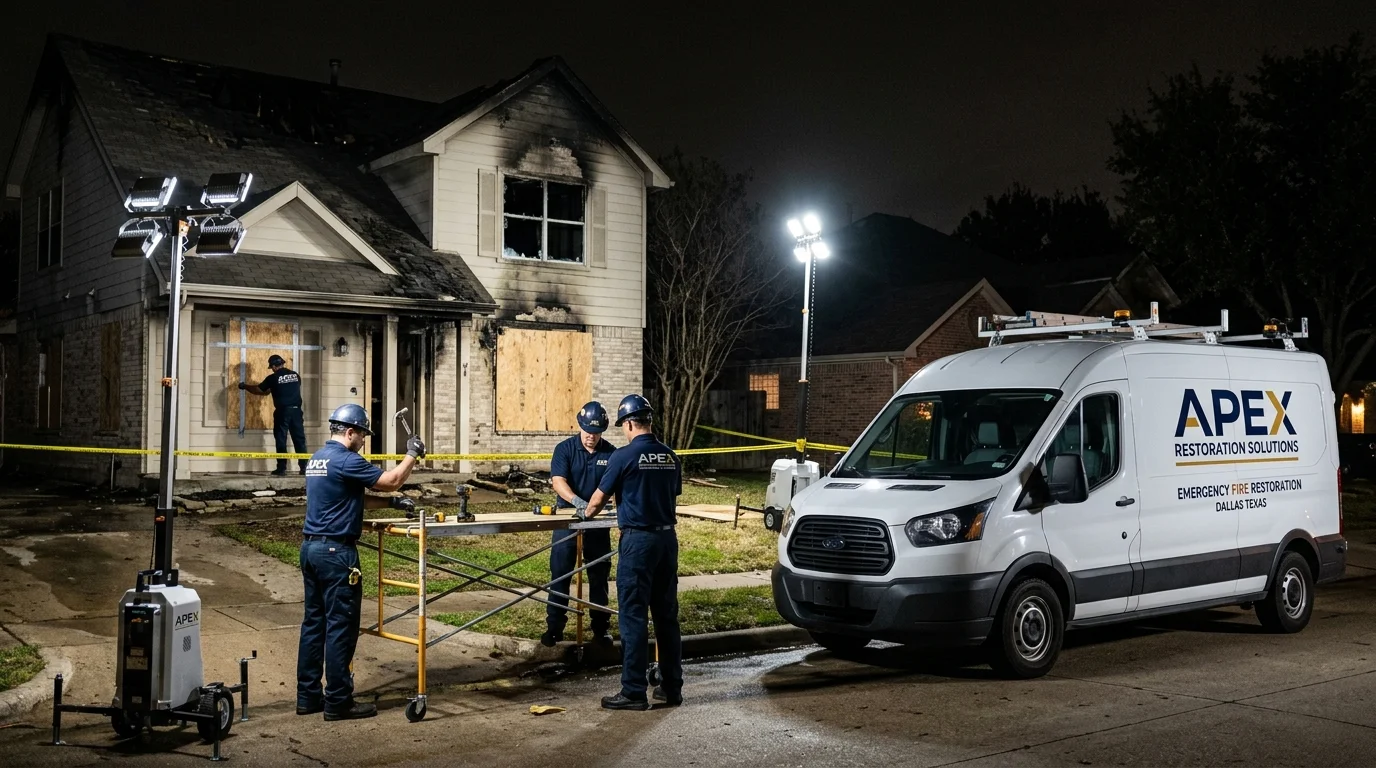
Dallas Debris & Cleanup Dispatch
Heavy-duty equipment & roll-off container mobilization across all 51 Dallas ZIP codes.
What Does Demolished Structure Hauling Involve?
Hauling heavy post-fire structural demolition materials involves coordinated planning, heavy equipment handling, and neighborhood-conscious execution:
Site Logistics & Container Staging
We evaluate street access, overhead power lines, and driveway load capacities in Dallas neighborhoods—from dense Uptown and Lower Greenville avenues to expansive North Dallas estates—selecting optimal container placements.
City of Dallas Right-of-Way Permitting
When containers must be staged on city streets or public alleys, our dispatch office procures required right-of-way permits and barricade approvals from the Dallas Department of Public Works.
Surface Protection Measures
Heavy steel roll-off containers can crack asphalt or concrete driveways. Our crews place 4x8 hardwood distribution planks beneath all roller wheels and hydraulic stabilizing feet.
Mechanical & Manual Loading
Crews systematically load heavy masonry, collapsed timber beams, and burned roofing materials, distributing weight evenly to comply with Texas Department of Transportation (TxDOT) road limit regulations.
Secured Highway Transit
All open-top roll-off containers are fitted with automated heavy-duty mesh tarps to prevent loose fire debris or ash from blowing onto North Texas highways during transit.
Licensed Landfill Disposal
Waste is transported exclusively to authorized regional facilities, such as the City of Dallas McCommas Bluff Landfill, with certified weight manifests retained for insurance records.
Roll-Off Container Capacity Guide for Dallas Fire Projects
Selecting the proper container dimensions prevents overloaded bin penalties and optimizes transport costs:
20-Yard Heavy Rubble Container
Optimized for masonry rubble, broken concrete slabs, tile flooring, and saturated plaster.
Carries up to 10,000 lbs of heavy, dense construction debris without exceeding road limits.
Dimensions: 22 ft long x 8 ft wide x 4.5 ft high with low loading sides.
30-Yard Structural Demolition Container
Best suited for whole-room structural demolition, charred timber framing, and collapsed drywall.
Holds approximately 12 to 15 pickup truck loads of general building demolition waste.
Dimensions: 22 ft long x 8 ft wide x 6 ft high.
40-Yard Large-Scale Project Container
Designed for commercial properties, multi-room fires, and full roof deck tear-offs.
Accommodates bulky charred structural trusses, exterior siding, and large volumes of framing.
Dimensions: 22 ft long x 8 ft wide x 8 ft high.
Local Municipal Compliance & Insurance Documentation
Transporting structural fire demolition waste in Dallas requires compliance with strict city codes and insurance standards:
Dallas Street-Use & Obstruction Permits
Staging a roll-off container on a public roadway without an approved permit violates Dallas City Code Chapter 43. We handle all paperwork, safety flasher attachments, and reflective cone placements.
TxDOT Road Weight Regulations
Wet fire debris is extraordinarily heavy. Our team calculates payload density to prevent exceeding gross vehicle weight ratings (GVWR) on Dallas thoroughfares and bridges.
Certified Scale Manifests for Insurance
Every load hauled by our fleet is weighed at state-certified scales upon entering and exiting the disposal facility, matching scale tickets directly to your claim's Xactimate line items.
Storm Drain Runoff Protection
We install protective silt fencing and curb inlet filters around container staging areas to prevent soot-contaminated runoff from washing into Dallas storm sewers during rainstorms.
Frequently Asked Questions
Can you place a roll-off dumpster on the street in front of my Dallas house?
Yes, provided an official right-of-way permit is obtained from the City of Dallas. Our logistics coordinators handle permit acquisition, barricade delivery, and required reflective safety markings to ensure full municipal compliance.
How quickly can full dumpsters be swapped out for empty ones?
We coordinate same-day or next-morning dumpster exchanges across Dallas County. When a container reaches maximum capacity, our transport driver delivers an empty container and hauls the full bin away in a single trip to maintain workflow momentum.
Will the heavy dumpster crack my concrete or decorative paver driveway?
We take extensive precautions to safeguard property surfaces. Our crews place thick 4x8 hardwood blocking and heavy rubber pads beneath container rollers and support legs, distributing the payload weight and preventing surface abrasion or cracking.
What happens to structural scrap metal during hauling?
Where feasible, metal structural elements—such as steel beams, metal studs, and copper piping—are sorted and routed to certified North Texas metal recycling facilities, reducing landfill volume and environmental impact.
Related Debris, Ash & Cleanup Solutions
Overview of comprehensive post-fire cleanup services in Dallas.
Bulk extraction of collapsed drywall, insulation, and fire rubble.
Safe haul-off and inventorying of burned, ruined furnishings.
Compliant disposal of chemical toxins and regulated fire waste.
Available Across All 51 Dallas ZIP Codes
Our emergency response and restoration specialists deploy 24/7 across every Dallas County neighborhood. Select your local district below for localized response details:
Fire Recovery & Technical Insights
What to Do in the First 24 Hours After a House Fire
Critical safety, insurance notification, and board-up steps once fire officials release the scene.
Understanding Smoke and Soot Types: Wet, Dry & Protein
Why household cleaning smears acidic soot and how chemical counteractants stop etching.
Navigating Fire Damage Insurance Claims
How Xactimate line-item estimates, ACV vs RCV, and Texas building ordinance coverage work.