Flooring Fire Damage Repair in Dallas, TX
Flooring assemblies endure an intense, dual-front assault during a structural fire. From above, radiating room flashover temperatures scorch surface varnishes, melt synthetic carpet fibers, crack ceramic tile glazing, and drive oily soot particulates deep into porous wood grain and cementitious grout lines. Simultaneously, from below and along the surface, thousands of gallons of firefighting water poured out by suppression crews pool across floor surfaces, seeping beneath baseboards and saturating subfloor cavities.
In Dallas's humid subtropical climate, standing firefighting water causes rapid structural degradation. Solid oak hardwood floors cup and buckle within 24 hours, laminate cores swell irrevocably, carpet padding turns into a toxic biological reservoir, and moisture trapped beneath flooring on concrete slabs triggers massive mold amplification. Our Dallas flooring restoration division provides comprehensive, multi-surface floor fire damage repair across all 51 Dallas ZIP codes.
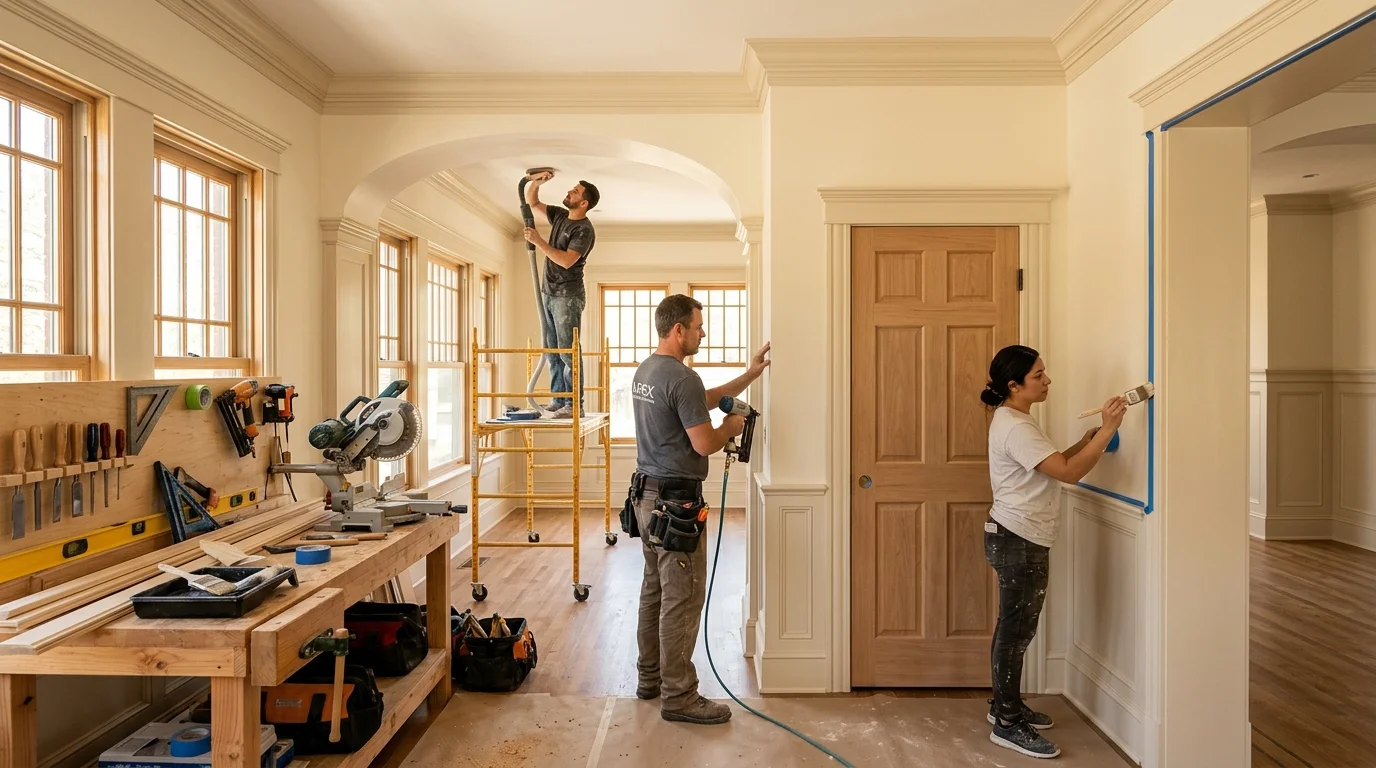
Dallas Flooring Restoration & Drying Desk
Hardwood drying technicians, tile specialists & subfloor carpenters deployed across Dallas County.
Scope Exclusivity: The Unified Hub for All Floor Systems
Block 7 is the dedicated authority for all floor surfaces, floor coverings, and the structural subfloor system:
Hardwood Flooring Restoration
Solid red oak, white oak, and engineered timber drying, cupping reversal, char planing, tooth-in board lacing, and custom stain matching.
Ceramic, Porcelain & Stone Tile
Thermal shock crack repairs, hollow tile rebonding, deep chemical soot extraction from porous grout lines, and color-matched re-grouting.
Carpet & Padding Extraction
High-volume water extraction, contaminated carpet cutting and hauling, tack strip extraction, and concrete/wood subfloor HEPA sanitation.
Structural Subfloor Repair
3/4-inch tongue-and-groove plywood and OSB sheathing extraction, joist sistering tie-ins, deflection leveling, and shellac odor encapsulation.
Dallas Foundation Considerations: Slab vs. Pier-and-Beam
Flooring restoration methodology in Dallas depends fundamentally on the underlying foundation construction:
Slab-on-Grade Concrete Foundations
When firefighting water pools on concrete, moisture migrates into the porous slab. If flooring is laid before the slab dries, trapped moisture leads to adhesive failure and persistent mold.
We utilize industrial Low-Grain Refrigerant (LGR) dehumidifiers and test internal slab relative humidity using ASTM F2170 in-situ probes before flooring installation.
Crawlspace Pier-and-Beam Foundations
Fire suppression water drains through subfloors into dark crawlspaces, saturating floor joists and creating severe moisture differentials that warp hardwood floors above.
We deploy crawlspace extraction, negative-air structural drying, and subfloor moisture balancing to protect historic Dallas timber frameworks.
Frequently Asked Questions
Can cupped hardwood floors be saved after a fire, or must they be replaced?
In many cases, cupped hardwood floors can be saved if drying begins promptly before wood fibers suffer cellular collapse. We deploy specialized vacuum-assisted Injectidry floor drying mat systems that draw moisture upward through the wood pores. Once moisture content is balanced back to normal North Texas levels (8% to 10%), the boards flatten out, allowing dustless sanding and refinishing without costly replacement.
Why does fire-damaged carpet always require removal rather than steam cleaning?
Firefighting water mixed with caustic ash, toxic soot particulates, and chemical residues creates Category 3 (grossly contaminated) water. Carpet padding acts as a giant sponge that traps these toxic carcinogens against the subfloor. Surface steam cleaning cannot extract contaminated padding or decontaminate porous backing; retaining it creates permanent indoor air contamination and mold hazards.
How do you treat soot and smoke odor trapped beneath floor coverings?
Before any new finished flooring is installed, the bare concrete or wood subfloor is thoroughly HEPA-vacuumed, treated with botanical antimicrobial solutions, and coated with two passes of white pigmented shellac odor-barrier primer (such as Zinsser B-I-N). This forms an impermeable barrier that permanently locks in smoke molecules.
Does homeowners insurance cover matching undamaged flooring into connected rooms?
Under Texas insurance claim standards and 'line of sight' guidelines, if matching hardwood or tile materials are unavailable to repair a contiguous open-concept floor plan, insurance carriers routinely approve replacing or refinishing continuous flooring into adjacent undamaged living areas to preserve uniform architectural appearance.
Related Flooring & Subfloor Solutions
Solid oak cupping restoration, board replacement, and refinishing.
Hollow tile rebonding, crack repair, and deep grout cleaning.
Contaminated carpet/pad extraction and subfloor sanitation.
3/4" tongue-and-groove plywood replacement and leveling.
Available Across All 51 Dallas ZIP Codes
Our emergency response and restoration specialists deploy 24/7 across every Dallas County neighborhood. Select your local district below for localized response details:
Fire Recovery & Technical Insights
What to Do in the First 24 Hours After a House Fire
Critical safety, insurance notification, and board-up steps once fire officials release the scene.
Understanding Smoke and Soot Types: Wet, Dry & Protein
Why household cleaning smears acidic soot and how chemical counteractants stop etching.
Navigating Fire Damage Insurance Claims
How Xactimate line-item estimates, ACV vs RCV, and Texas building ordinance coverage work.