What to Do in the First 24 Hours After a House Fire: An Immediate Safety & Recovery Checklist
The first 24 hours after Dallas Fire-Rescue clears a property determine structural salvageability. Follow this step-by-step checklist to secure your property and start recovery.
Key Answer & Essential Rule
Do not enter a fire-damaged home until local fire officials officially declare it safe. Once cleared, immediately notify your insurance carrier, arrange emergency board-up to prevent weather and trespasser damage, and avoid touching soot-covered surfaces.
When Can You Safely Re-Enter a Fire-Damaged Property?
Before taking a single photograph or retrieving personal belongings, confirm that local emergency responders have completed their overhaul phase. Overhaul involves opening walls and ceilings to detect hidden embers, which leaves structural framing weakened and insulation hanging.
Never attempt to reconnect electric meters, turn on main breakers, or open gas valves yourself. Water from fire suppression hoses frequently saturates distribution panels and sub-panels, creating severe electrocution risks. In the Dallas area, Oncor Electric Delivery or the municipal building inspector must evaluate electrical systems before reconnection is authorized.
Atmospheric & Respiratory Warning
Synthetic materials in modern homes—including polyurethane upholstery, PVC piping, and laminate flooring—release hydrogen cyanide, carbon monoxide, and microscopic carcinogens when burned. Do not enter without NIOSH-certified P100 or N95 respirators.
How Should You Contact and Report the Incident to Your Insurance Carrier?
When notifying your claims representative, state the basic facts clearly: date, approximate time, and responding fire department incident report number. Avoid speculating about the ignition source or extent of hidden structural damage until forensic fire inspectors and licensed restorers evaluate the property.
Ask specifically for your policy's Loss of Use / ALE provisions. Most policies reimburse hotel lodging, meals exceeding normal expenses, and emergency clothing, provided you retain all itemized receipts.
| Immediate Insurance Action | Why It Matters | Documentation Required |
|---|---|---|
| Obtain Claim Number | Identifies your file for all contractors and adjusters | Policy number, date of incident |
| Request Advance on ALE | Funds hotel, clothing, and immediate family needs | Receipts from grocery stores and temporary lodging |
| Confirm Mitigate-Loss Clause | Policies require owners to take reasonable steps to prevent further damage | Contractor work authorizations and photos |
| Request DFR Incident Report | Official validation of incident clearance and origin investigation | Dallas Fire-Rescue incident ID |
Why Is Emergency Board-Up and Weatherproofing Legally Required?
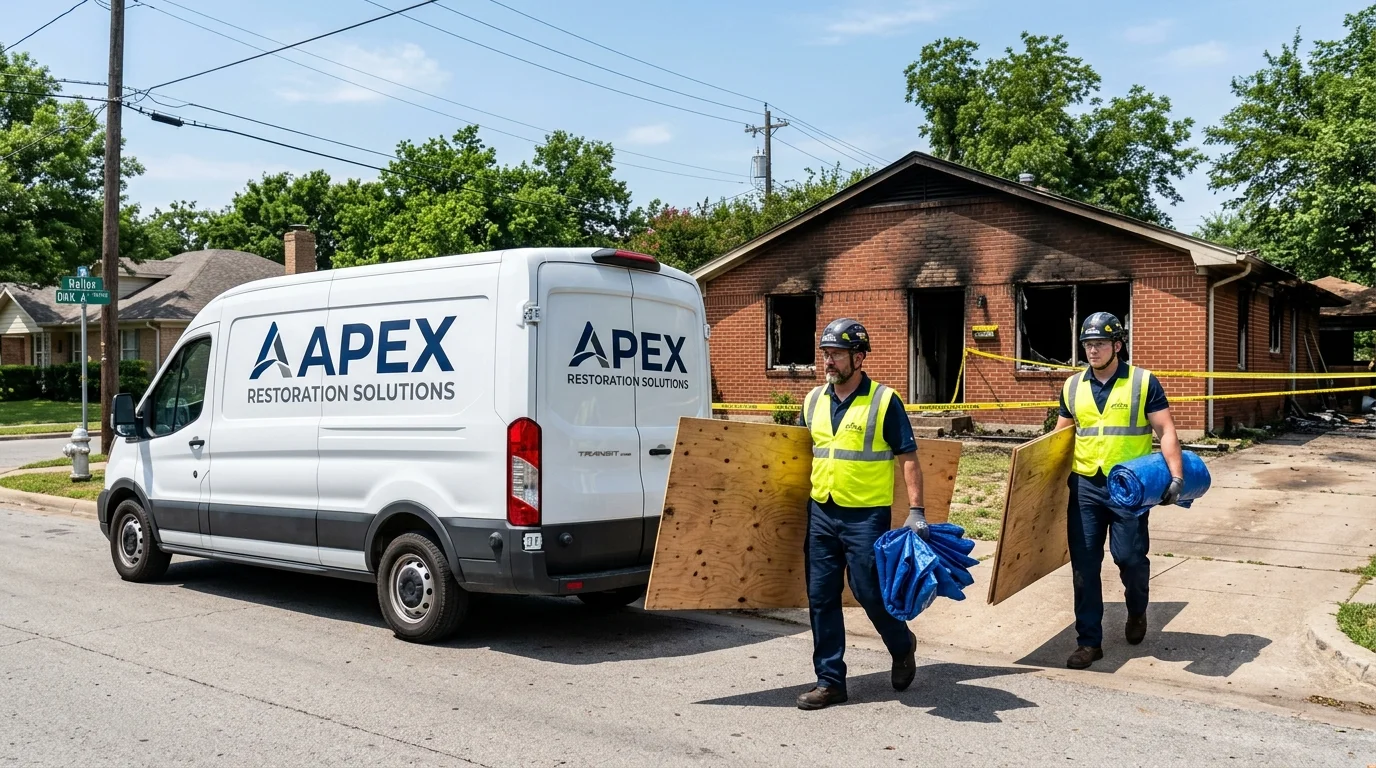
Broken windows, kicked-in doors, and burned roof decks expose interior finishes to North Texas weather, humidity, and unauthorized entry. Emergency board-up crews use exterior-grade CDX plywood secured with framing tension bolts to cover openings without causing additional damage to window casings.
If roof trusses or decking have collapsed, heavy-duty 10-mil reinforced polyethylene tarps must be secured with 2x4 furring strips past the roof ridge. This prevents rainwater from entering upper ceilings and cascading into electrical fixtures and interior wall cavities below.
How Do You Document Fire and Soot Damage Correctly?
Take digital photos of structural elements, flooring, appliances, light fixtures, and wall surfaces. Capture both heavily charred items and rooms that appear unaffected, as acidic soot travels rapidly through HVAC ducts and settles on contents throughout the home.
Do not throw away damaged personal items, appliances, or architectural trim until your insurance adjuster completes an on-site joint inspection and approves disposal. A premature discard can lead to disputed inventory valuations on your Proof of Loss filing.
What Mistakes Should You Avoid in the First 24 Hours?
Standard household cleaners react chemically with acidic soot, driving oily carbon deposits deeper into latex wall paint and porous drywall, permanently staining the substrate. Specialized chemical dry-cleaning sponges and HEPA vacuum systems are required.
Running central air conditioning pulls microscopic soot particles, carbon particulates, and acidic ash through return air ducts, contaminating evaporator coils and redistributing smoke odor into unaffected rooms.
Need Professional Assessment or Assistance?
Explore our dedicated technical division for Immediate Fire Damage Response, find mobile response teams across all 51 Dallas coverage areas, or review our comprehensive Dallas fire damage restoration operations.
Frequently Asked Questions
Can I stay in my home if the fire was contained to one room?
Generally, no. Even small, contained room fires generate toxic smoke, airborne fine particulates (PM2.5), and volatile organic compounds that travel through wall cavities, plumbing chases, and ventilation ducts. An indoor environmental check and professional soot evaluation should verify safety first.
Who pays for emergency board-up services after a fire?
Emergency board-up and temporary stabilization are covered under the reasonable and necessary repairs provision of standard homeowners insurance policies (such as Texas HO-B and HO-3 forms), usually filed directly as part of your mitigation coverage.
Should I throw away food that was inside the refrigerator?
Yes. The heat from a structure fire expands refrigerator door gaskets, allowing chemical fumes and toxic smoke to enter the food storage compartment. Furthermore, prolonged power interruptions allow bacterial growth, rendering food unsafe.