Fire Damage Inspection in Dallas, TX
A proper fire damage inspection provides the technical blueprint for your entire property recovery. Before any repair crews swing a hammer or remove charred materials, certified inspectors must evaluate the true structural, chemical, and mechanical impact of the fire. In North Texas, intense heat alters wood load capacities, causes concrete spalling, and forces acidic soot deep into hidden wall chases and air ventilation networks.
Our Dallas-based inspection specialists deliver meticulous pre-restoration evaluations. We uncover hidden compromises that casual visual walkthroughs miss, such as scorched floor joists beneath saturated subfloors, compromised electrical circuits, and soot migration behind drywall assemblies. Every assessment generates detailed line-item photographic reports formatted to meet carrier standards and city building safety requirements.
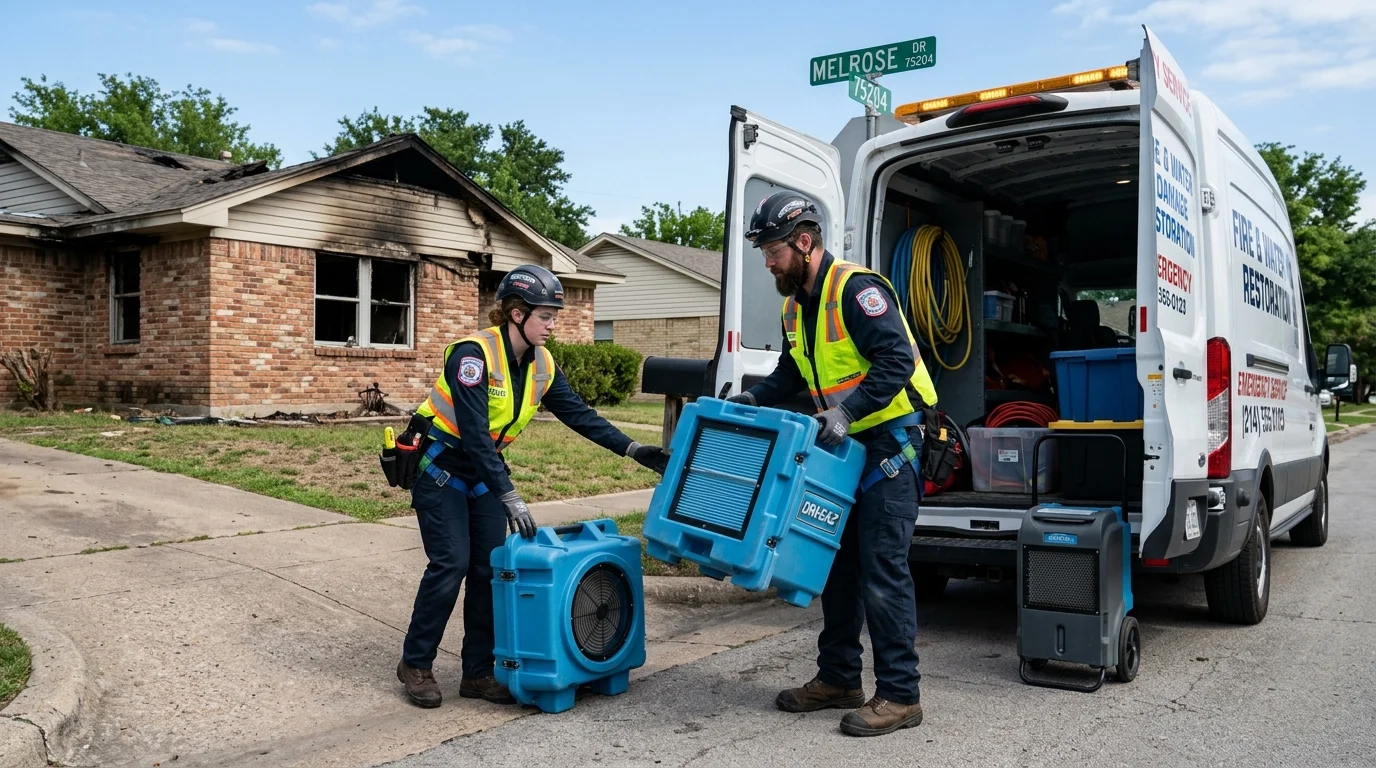
Dallas Certified Inspection Desk
Technical field evaluators ready for on-site assessment across all 51 Dallas ZIP codes.
What Does a Comprehensive Dallas Fire Damage Inspection Cover?
A comprehensive fire damage inspection evaluates five fundamental structural and environmental systems:
Load-Bearing Structural Framework
Examination of roof trusses, exterior wall studs, floor joists, and foundation slab integrity for deflection, char depth, or thermal degradation.
Smoke and Soot Penetration Mapping
Chemical surface testing and cavity borescopic checks to track acidic residue dispersion and distinguish between dry, wet, and protein soot.
Mechanical and Electrical Safety
Evaluation of burned wiring, panel assemblies, conduit runs, and gas line fittings to identify secondary flash hazards.
HVAC Air Quality and Duct Networks
Inspection of return plenums, internal duct liners, heat exchangers, and air handlers for combustion byproduct infiltration.
Moisture and Water Intrusion
Infrared thermal imaging and dielectric moisture mapping to measure water volume absorbed by framing during firefighting operations.
Specialized Inspection Services Across Your Property
Evaluating fire damage requires distinct forensic techniques depending on the affected building system. Explore our dedicated inspection areas across Dallas County:
Structural Integrity Inspection
Extreme heat weakens load-bearing lumber, softens structural steel, and spalls poured concrete slabs. Our certified team analyzes char depths, truss plate deformation, and load-path stability to identify members that require structural shoring or full replacement.
Learn more about our Structural Integrity Inspection Services at /fire-damage-inspection-in-dallas/structural-integrity-inspection/.
Smoke Damage Inspection
Different burning fuels leave distinct soot chemistry on your interior surfaces. We perform wipe tests and chemical pH analyses to map synthetic, organic, and protein smoke distribution throughout finished rooms, crawlspaces, and attics.
Learn more about our Smoke Damage Inspection Services at /fire-damage-inspection-in-dallas/smoke-damage-inspection/.
Electrical Fire Damage Inspection
Fires compromise wiring insulation, fuse boxes, and branch circuits throughout wall cavities. We conduct non-destructive testing and collaborate with licensed electricians to pinpoint fire origin points and locate hidden arc damage.
Learn more about our Electrical Fire Damage Inspection Services at /fire-damage-inspection-in-dallas/electrical-fire-damage-inspection/.
HVAC Post-Fire Inspection
When a building's heating and cooling system operates during a fire, blower fans distribute toxic soot particles throughout the entire duct network. We inspect supply trunks, fiberglass duct liners, and evaporator coils for particulate contamination.
Learn more about our HVAC Post-Fire Inspection Services at /fire-damage-inspection-in-dallas/hvac-post-fire-inspection/.
Thermal Imaging Fire Inspection
High-resolution infrared thermography detects hidden moisture behind wall assemblies and verifies that no smoldering embers linger inside wall cavities. This non-invasive technology pinpoints concealed damage without unnecessary demolition.
Learn more about our Thermal Imaging Fire Inspection Services at /fire-damage-inspection-in-dallas/thermal-imaging-fire-inspection/.
Fire Loss Assessment
A complete loss evaluation measures the full scope of structural, finish, and architectural damage across the property. We deliver detailed room-by-room inventories that serve as the foundation for your restoration action plan.
Learn more about our Fire Loss Assessment Services at /fire-damage-inspection-in-dallas/fire-loss-assessment/.
Insurance Fire Damage Documentation
Insurance adjusters require rigorous, defensible documentation to process property claims accurately. We assemble date-stamped photo logs, moisture readings, 3D structural scans, and standardized Xactimate line items to document every loss item.
Learn more about our Insurance Fire Damage Documentation Services at /fire-damage-inspection-in-dallas/insurance-fire-damage-documentation/.
Why Is a Certified Inspection Crucial Before Beginning Repairs?
Attempting repairs without a certified inspection frequently causes severe project delays, safety hazards, and unaddressed structural defects. Here is why an exhaustive pre-work inspection is essential:
Prevents Hidden Structural Collapse
Wood that looks only lightly charred on the surface may have suffered significant fiber reduction, drastically lowering its load capacity.
Halts Secondary Chemical Corrosion
Acidic soot particles bond with atmospheric moisture, corroding metal pipes, copper wiring, and brass fasteners if not identified and treated promptly.
Eliminates Chronic Smoke Odors
Trapped soot particles in uninspected wall cavities or subfloor layers will continue off-gassing carcinogenic volatile organic compounds for years.
Streamlines Insurance Verification
A standardized, line-by-line inspection report eliminates discrepancies with carrier adjusters and accelerates approved restoration scopes.
Protects Building Code Compliance
Dallas municipal codes require formal structural engineering verifications before permits are granted for structural framing repairs.
Our 4-Step Technical Inspection Process
Our field evaluators utilize an objective, diagnostic methodology to document every aspect of fire and suppression impact:
1. Exterior Envelope & Safety Perimeter Check
We evaluate exterior brick veneer, foundation grade lines, roof lines, and service panels to confirm safe entry conditions.
2. Primary Structural Load Mapping
Inspectors systematically test framing members, measuring char penetration depth against structural engineering thresholds.
3. Thermal & Concealed Cavity Scans
Using FLIR thermal cameras and digital moisture meters, we inspect wall cavities, attic insulation, and floor assemblies for hidden water and heat pockets.
4. Comprehensive Loss Documentation Package
We assemble all field measurements, chemical test results, and high-resolution photographs into an itemized diagnostic report ready for your review and insurance carrier submission.
Frequently Asked Questions
How soon after a fire should an inspection take place?
An inspection should be scheduled as soon as Dallas Fire-Rescue officials release the property and declare the scene cold and safe to enter. Prompt inspections ensure that secondary damage from acidic soot deposits, humidity, and standing water is cataloged before decay worsens.
What is the difference between an immediate site inspection and a full damage assessment?
An immediate site inspection focuses strictly on urgent safety risks—such as open breaches, gas leaks, and collapse dangers—to stabilize the building on the day of the incident. A full fire damage inspection is a comprehensive diagnostic evaluation of all structural framing, mechanical networks, soot dispersion, and moisture levels to build the long-term restoration plan.
Can fire damage affect areas of my home that never touched flames?
Yes. Superheated smoke, toxic gases, and chemical soot travel rapidly through interior pipe chases, HVAC ductwork, and ceiling cavities into rooms far from the original flames. Additionally, thousands of gallons of firefighting water run downward through floors and walls, creating widespread moisture risks in rooms untouched by heat.
Does your inspection report align with insurance adjuster requirements?
Yes. Our documentation package is specifically prepared to meet carrier underwriting standards. We provide line-item inventories, categorized photographic proofs, moisture readings, and structural impact summaries that insurance adjusters require to evaluate a property loss.
Related Inspection & Assessment Solutions
Dedicated structural framing, joist, and truss evaluations.
Chemical wipe tests and soot migration mapping.
Non-invasive moisture and cavity thermal scans.
Review our immediate site stabilization and board-up capabilities.
Return to the comprehensive Dallas fire damage recovery hub.
Available Across All 51 Dallas ZIP Codes
Our emergency response and restoration specialists deploy 24/7 across every Dallas County neighborhood. Select your local district below for localized response details:
Fire Recovery & Technical Insights
What to Do in the First 24 Hours After a House Fire
Critical safety, insurance notification, and board-up steps once fire officials release the scene.
Understanding Smoke and Soot Types: Wet, Dry & Protein
Why household cleaning smears acidic soot and how chemical counteractants stop etching.
Navigating Fire Damage Insurance Claims
How Xactimate line-item estimates, ACV vs RCV, and Texas building ordinance coverage work.