Fire Debris Removal in Dallas, TX
An active fire transforms familiar rooms into hazardous debris fields piled with collapsed drywall, shattered glass, water-soaked insulation, and scorched structural materials. Leaving this compromised material inside the building exposes load-bearing framing to crushing dead weight and locks in thousands of gallons of suppression water. Physical debris removal is the essential initial remediation step required before any technical soot washing, air deodorization, or general contractor rebuilding can start.
Our Dallas-based debris removal crews provide rapid, controlled extraction of burnt building components throughout all 51 Dallas ZIP codes. We clear compromised interior spaces down to clean framing surfaces, sorting materials on-site, securing proper Dallas roll-off street permits, and delivering full photographic records for insurance claim adjustments.
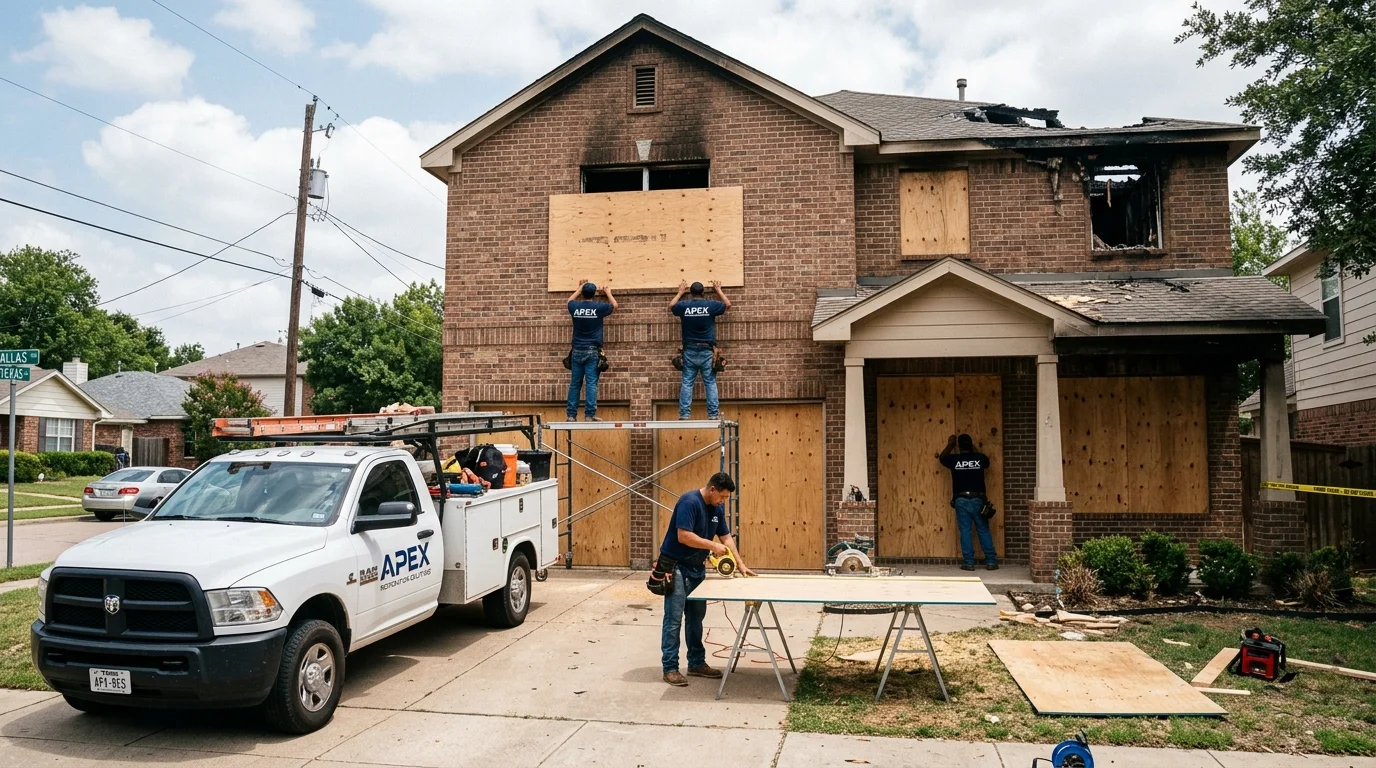
Dallas Debris & Cleanup Dispatch
Heavy-duty equipment & roll-off container mobilization across all 51 Dallas ZIP codes.
What Does Professional Fire Debris Removal Include?
Removing fire debris involves far more than simply throwing rubble into a bin. It requires technical containment, structural awareness, and systematic triage:
Particulate Containment Setup
Before moving debris, crews seal off unaffected living quarters using heavy 6-mil poly containment walls and negative air machines with HEPA filtration to keep loose soot from migrating.
Bulk Drywall & Plaster Removal
Waterlogged, scorched gypsum board and plaster that collapsed from ceilings or walls are systematically shoveled, bagged, and removed.
Insulation Extraction
Soaked fiberglass batts and blown-in cellulose insulation are extracted from attic spaces, joist bays, and wall cavities to eliminate trapped moisture and hidden embers.
Flooring & Subfloor Debris Stripping
Scorched carpets, warped laminates, and shattered tiles are stripped away to reveal the condition of underlying concrete slabs or wood subfloors.
On-Site Salvage Triage
Items with sentimental or restorative value discovered within debris heaps are carefully set aside for owner evaluation rather than hauled away.
Compliant Roll-Off Hauling
All discarded materials are loaded into heavy-duty commercial dumpsters and transported to licensed North Texas disposal facilities.
Key Operational Differences: Debris Removal vs. Surface Cleaning
Understanding the distinction between physical debris extraction and subsequent remediation phases prevents costly project delays:
Debris Removal (Physical Extraction)
Focuses on heavy non-salvageable burnt rubble, collapsed drywall, and soaked insulation.
Requires wrecking bars, heavy-duty collection bags, wheelbarrows, and roll-off dumpsters.
Must occur as the primary step to expose bare structural framing.
Soot & Surface Cleaning (Technical Remediation)
Focuses on salvageable intact walls, woodwork, fixtures, and structural framing.
Utilizes dry chemical sponges, alkaline counteracting washes, and ultrasonic cavitation tanks.
Takes place strictly after all loose debris and ash mounds have been hauled away.
The Hazards of Leaving Burnt Debris Inside Your Property
Allowing piles of burnt debris to remain inside a Dallas building triggers severe secondary complications:
Catastrophic Ceiling Collapses
Wet ceiling drywall absorbs up to five times its dry weight in firefighting water. If left unremoved, saturated ceilings collapse unexpectedly onto underlying floors.
Accelerated Timber Rot & Mold
Piles of wet debris trapped against wood sill plates and subfloors create a continuous moisture wick, causing wood rot and rapid mold propagation within 24 to 48 hours in warm Texas climates.
Corrosive Chemical Vapor Traps
Debris holds damp combustion ash that continuously off-gases acidic fumes, discoloring metallic door hardware, copper piping, and electrical panels throughout the building.
Safety Obstructions for Adjusters
Adjusters, structural engineers, and city inspectors cannot safely navigate rooms filled with hidden nails, broken glass, and unstable flooring.
Frequently Asked Questions
How fast can your debris removal team arrive in Dallas?
Our Dallas dispatch desk is staffed 24 hours a day. Following site clearance by Dallas Fire-Rescue and approval from your carrier, field crews and roll-off containers can be mobilized to your location rapidly across all Dallas County neighborhoods.
Does your team provide photographic proof of all removed debris for my insurance?
Yes. Every phase of debris removal is fully photographed before, during, and after extraction. We generate comprehensive photographic logs and weight slips that integrate seamlessly into your adjuster's Xactimate claim file.
Can your crews clear debris from attic and crawlspace areas?
Yes. Our specialists are equipped with personal protective equipment (PPE), full-face respirators, and heavy-duty HEPA collection vacuums specifically designed to extract burnt insulation and debris from tight attic cavities and crawlspaces.
Will debris removal stir up toxic smoke odors in unaffected rooms?
No. We establish negative air pressure containment using commercial HEPA air filtration units before disturbing any debris. This prevents airborne soot, ash, and volatile odors from drifting into clean sections of your property.
Related Debris, Ash & Cleanup Solutions
Overview of comprehensive post-fire cleanup services in Dallas.
Surgical removal of burned timber studs, joists, and baseboards.
HEPA vacuuming and deep caustic particulate extraction.
Heavy rubble transport, roll-off dumpsters, and city permits.
Available Across All 51 Dallas ZIP Codes
Our emergency response and restoration specialists deploy 24/7 across every Dallas County neighborhood. Select your local district below for localized response details:
Fire Recovery & Technical Insights
What to Do in the First 24 Hours After a House Fire
Critical safety, insurance notification, and board-up steps once fire officials release the scene.
Understanding Smoke and Soot Types: Wet, Dry & Protein
Why household cleaning smears acidic soot and how chemical counteractants stop etching.
Navigating Fire Damage Insurance Claims
How Xactimate line-item estimates, ACV vs RCV, and Texas building ordinance coverage work.