Understanding Smoke and Soot Types: Wet, Dry, Protein, and Fuel Oil Residues
Not all fire smoke is identical. Understanding the difference between dry smoke, wet smoke, and invisible protein residues is critical to avoiding permanent surface etching.
Key Answer & Essential Rule
Smoke residue varies based on combustion temperature and fuel source. High-temperature dry smoke leaves powdery carbon, while smoldering wet smoke produces sticky, highly acidic resins. Incorrect wiping chemically sets soot into paint and porous stone.
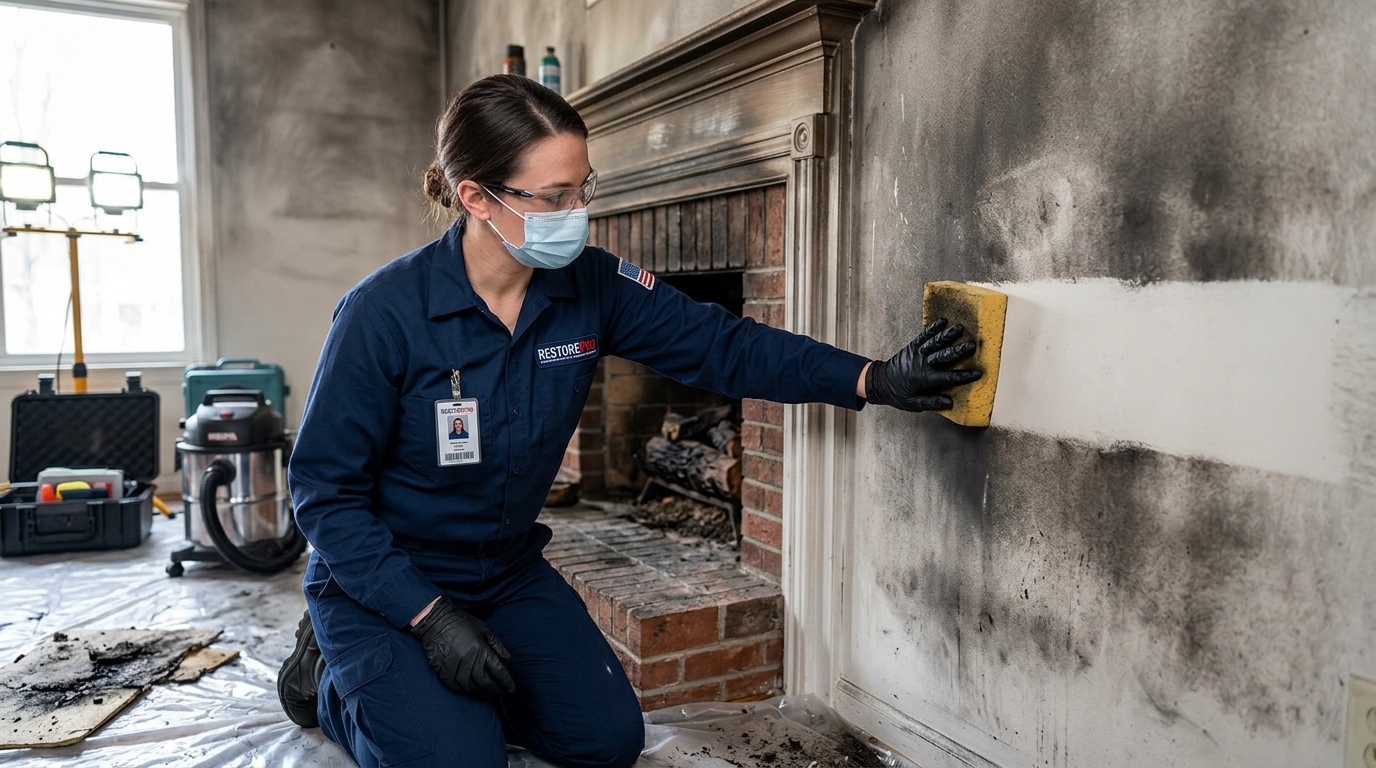
What Is Soot and Why Is It Chemically Corrosive?
When combustible materials burn, they release microscopic carbon particles ranging in size from 0.01 to 2.5 microns (PM2.5). These ultra-fine particles easily penetrate drywall pores, wood grains, and the smallest crevices in electronic circuit boards.
The chemical aggressiveness of soot accelerates in humid environments. The acidity reacts with chrome plumbing fixtures, brass hardware, aluminum window frames, and marble countertops, causing irreversible corrosion if not neutralized with pH-balanced counteracting agents.
What Are the Four Major Types of Smoke Residue?
Recognizing which type of smoke affected your property prevents costly cleaning mistakes. Applying water or alkaline detergents to wet smoke creates an oily smear that binds permanently to drywall, while attempting to wipe dry smoke without HEPA filtration drives abrasive particles deeper into wood finishes.
| Smoke Type | Combustion Condition | Characteristics | Impact on Surfaces |
|---|---|---|---|
| Dry Smoke | High-heat, fast-burning paper, wood, framing | Dry, powdery, fine non-smear residue | Easiest to clean; settles over wide areas and into electrical circuits |
| Wet Smoke | Low-heat, smoldering plastics, rubber, foam | Sticky, pungent, thick oily aerosol | Hardest to clean; smears heavily; permanently discolors synthetic materials |
| Protein Residue | Low-heat animal fats, vegetable oils, cooking | Nearly invisible, yellow-amber tint, extreme odor | Tightly adheres to kitchen cabinetry, tile grout, and appliances |
| Fuel Oil Residue | Furnace blowbacks, petroleum fuel failures | Dense, greasy black soot particles | Covers ductwork, furniture upholstery, and wall finishes |
How Quickly Does Soot Cause Permanent Damage to Surfaces?
Within minutes: Acidic soot settles on porous materials, producing immediate odor absorption and staining porous surfaces such as alabaster, marble, and unsealed travertine.
Within 24 to 48 hours: Fiberglass fixtures, automotive finishes, and laminate countertops begin yellowing. Unglazed ceramic tiles absorb acidic compounds, and metal finishes lose their reflective luster.
Within days to weeks: Uncoated metals pit and corrode. Wood furniture finishes blister, vinyl window casings permanently discolor, and electronic components fail due to electrical short circuits caused by conductive carbon bridges.
Why Do Standard Household Cleaners Worsen Smoke Damage?
Dry chemical sponges made of vulcanized natural rubber absorb soot mechanically through electrostatic attraction without utilizing moisture, lifting dry residues from delicate surfaces before any liquid contact.
For oily wet smoke and protein residues, specialized enzymatic digesters and degreasing agents break the chemical bonds of polymerized fats without stripping the underlying lacquer or architectural finish.
Need Professional Assessment or Assistance?
Explore our dedicated technical division for Smoke, Soot & Odor Treatment, find mobile response teams across all 51 Dallas coverage areas, or review our comprehensive Dallas fire damage restoration operations.
Frequently Asked Questions
Can you paint directly over smoke-damaged walls?
Never paint directly over soot. Paint cannot adhere to soot-coated surfaces and will peel. Furthermore, soot acidity and smoke odors will bleed through standard primers. Walls must be thoroughly decontaminated, rinsed, dried, and coated with a dedicated shellac or oil-based stain-and-odor blocking sealant.
Why is protein soot from a kitchen fire so hard to see?
Protein soot results from the evaporation of animal fats and vegetable oils during cooking fires. It leaves a nearly invisible, amber-colored micro-film that does not appear black like wood smoke, but emits an overwhelming, rancid odor that clings to cabinets, walls, and ceiling paint.
Does insurance cover cleaning smoke damage from unaffected rooms?
Yes. Standard insurance policies cover smoke and soot mitigation across the entire structure, including rooms untouched by flames, as long as testing proves soot migration and air contamination occurred.