Post-Fire Mold Prevention in Dallas, TX
Extinguishing a structure fire in Dallas requires thousands of gallons of high-pressure municipal water. While Dallas Fire-Rescue successfully suppresses open flames, the aftermath leaves building envelopes saturated with hot, contaminated water trapped inside enclosed wall cavities, interstitial floor assemblies, and attic insulation. Combined with Dallas's intense subtropical climate—where ambient summer temperatures consistently exceed 95°F to 100°F alongside high humidity—this trapped moisture creates an accelerated breeding ground for destructive microbial amplification.
Under normal conditions, mold spores germinate within 48 to 72 hours. However, in a fire-damaged Dallas structure, elevated indoor temperatures and nutrient-rich organic soot residues can accelerate spore germination down to 24 to 36 hours. Without aggressive, scientifically guided post-fire mold prevention protocols, property owners face devastating secondary structural decay, compromised indoor air quality, and escalated remediation expenses.
Our Dallas post-fire microbial mitigation team specializes in halting fungal amplification before it starts. Operating in full compliance with the Texas Department of State Health Services (TDSHS), Texas Mold Assessment and Remediation Rules (TMARR, 25 TAC Chapter 295), and the IICRC S520 Standard for Professional Mold Remediation, we deploy industrial-grade moisture mapping, EPA-registered broad-spectrum antimicrobials, negative air containment, and long-term preventative encapsulants across all 51 Dallas ZIP codes.
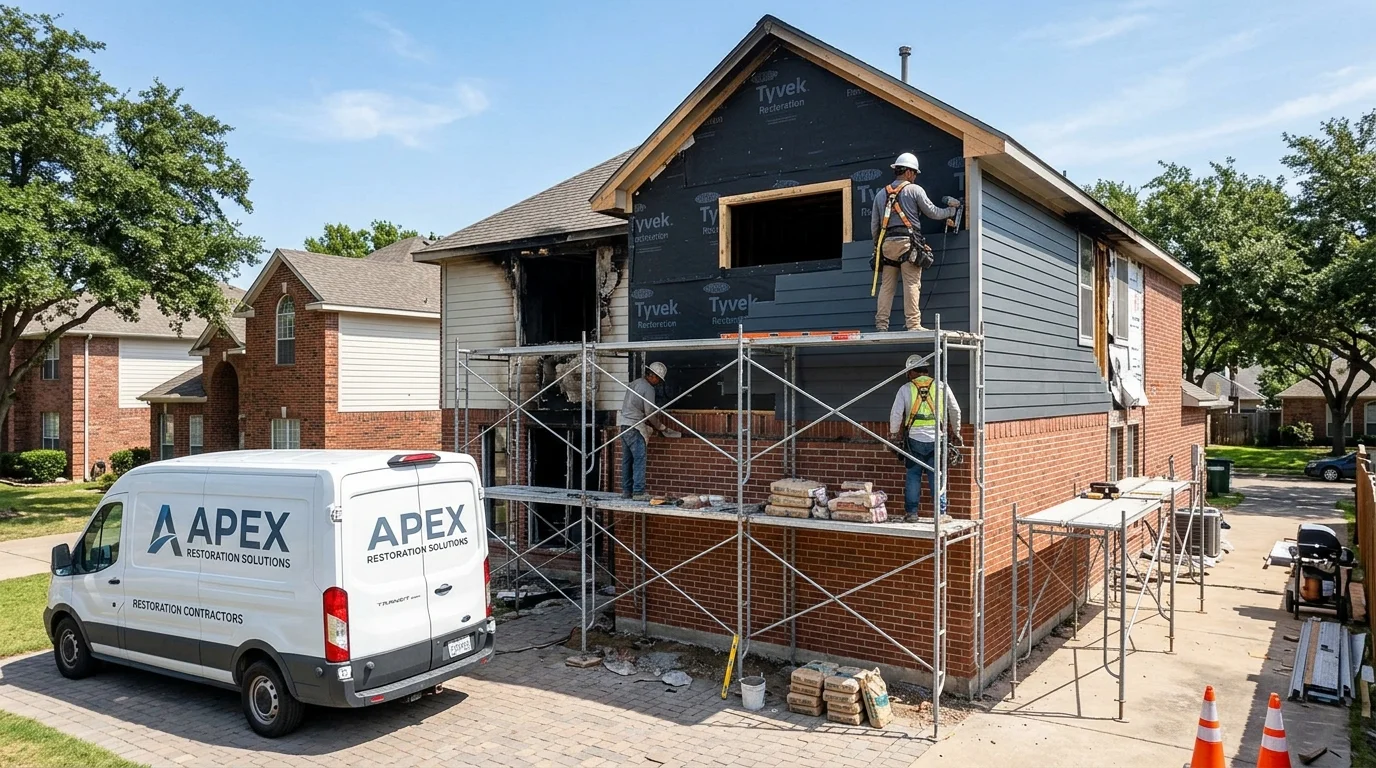
Dallas Post-Fire Microbial & Mold Prevention Desk
IICRC certified microbial remediation specialists, FLIR moisture mapping technicians & containment crews deployed across Dallas County.
Scope Exclusivity: Post-Fire Biological Risk Mitigation
Block 15 serves as the dedicated biological and microbial authority across the website:
Post-Fire Biological Focus
Governing strictly microbial evaluation, preventative antimicrobial application, fungicidal barrier coatings, and containment-controlled removal of mold-colonized building assemblies.
Separation from Physical Water Extraction
Bulk water extraction and structural dehumidification are handled under Block 9. Block 15 specifically addresses microbial biochemistry, fungal pathology, and spore amplification prevention.
Separation from General Weather Damage
Pre-existing plumbing leaks or deferred roofing maintenance are excluded; our protocols target the unique microbial ecology triggered by high-volume fire suppression water interacting with pyrolytic soot.
Strict Texas Regulatory Compliance
All assessments and remediation procedures adhere strictly to TDSHS licensing statutes (25 TAC Chapter 295), safeguarding policyholders during future property transactions.
Explore Our Post-Fire Mold Prevention Divisions
Navigate our complete spectrum of post-fire microbial prevention services across Dallas County:
Post-Fire Mold Inspection
FLIR infrared thermal imaging, calibrated moisture profiling, and diagnostic air/surface cassette sampling.
Antimicrobial Treatment After Fire
ULV cold fogging and electrostatic micro-misting with EPA-registered botanical and quaternary biocides.
Mold Prevention Treatment
Structural framing encapsulants, fungicidal elastomeric sealants, and moisture-vapor permeable antimicrobial barriers.
Mold-Contaminated Material Removal
Critical barrier containment, negative air HEPA filtration, and controlled disposal of saturated gypsum and insulation.
The Dallas Post-Fire Mold Prevention Protocol
Protecting fire-impacted properties from rapid microbial growth requires a multi-stage, scientifically verified sequence:
1. Thermal Imaging & Psychrometric Profiling
Deploying FLIR thermal cameras and non-invasive moisture meters to map moisture migration behind smoke-stained drywall, subfloors, and framing without unnecessary structural puncture.
2. Immediate Antimicrobial Application
Misting EPA-registered broad-spectrum disinfectants onto damp structural surfaces before demolition to neutralize viable fungal spores and halt hyphal germination.
3. Selective Removal of Saturated Porous Assemblies
Extracting wet gypsum board, blown cellulose insulation, and saturated carpet pads holding contaminated suppression water under HEPA-filtered negative pressure.
4. Structural Encapsulation & Environmental Stabilization
Sealing cleaned, dried framing with EPA-registered fungicidal coatings, providing long-term protection against seasonal Dallas humidity fluctuations.
Frequently Asked Questions
How fast can mold begin growing after fire suppression water is used in Dallas?
In the North Texas climate, mold spores can begin germinating within 24 to 48 hours of water exposure. When thousands of gallons of firefighting water saturate gypsum, wood framing, and fiberglass insulation inside an enclosed structure, the elevated ambient heat accelerates spore metabolic activity. Organic soot particles and paper drywall backing serve as immediate nutrient sources, making immediate antimicrobial application essential.
Does homeowners insurance cover post-fire mold prevention in Texas?
Yes, in the vast majority of Texas insurance claims, mold prevention and antimicrobial treatments necessitated directly by firefighting efforts are covered under the primary fire loss policy (Coverage A - Dwelling). Because the moisture originates from fire suppression rather than an excluded long-term plumbing maintenance failure, carriers consider it direct resultant loss. We document all moisture levels and antimicrobial applications in carrier-approved Xactimate line items.
What is the difference between simple drying and microbial prevention treatment?
Structural drying removes moisture from the air and building assemblies using commercial air movers and dehumidifiers. However, drying alone does not kill existing fungal spores or bacteria introduced by contaminated firefighting water. Antimicrobial and fungicidal treatments actively destroy spore cellular structures, prevent mycotoxin release, and leave an active protective barrier on framing to stop future colonization during the rebuilding phase.
Related Post-Fire Mold & Microbial Solutions
Forensic moisture diagnostic profiling and spore sampling.
ULV cold fogging and EPA-registered biocide applications.
Protective fungicidal framing sealants and encapsulants.
Negative air containment and controlled drywall extraction.
Available Across All 51 Dallas ZIP Codes
Our emergency response and restoration specialists deploy 24/7 across every Dallas County neighborhood. Select your local district below for localized response details:
Fire Recovery & Technical Insights
What to Do in the First 24 Hours After a House Fire
Critical safety, insurance notification, and board-up steps once fire officials release the scene.
Understanding Smoke and Soot Types: Wet, Dry & Protein
Why household cleaning smears acidic soot and how chemical counteractants stop etching.
Navigating Fire Damage Insurance Claims
How Xactimate line-item estimates, ACV vs RCV, and Texas building ordinance coverage work.