Charred Material Removal in Dallas, TX
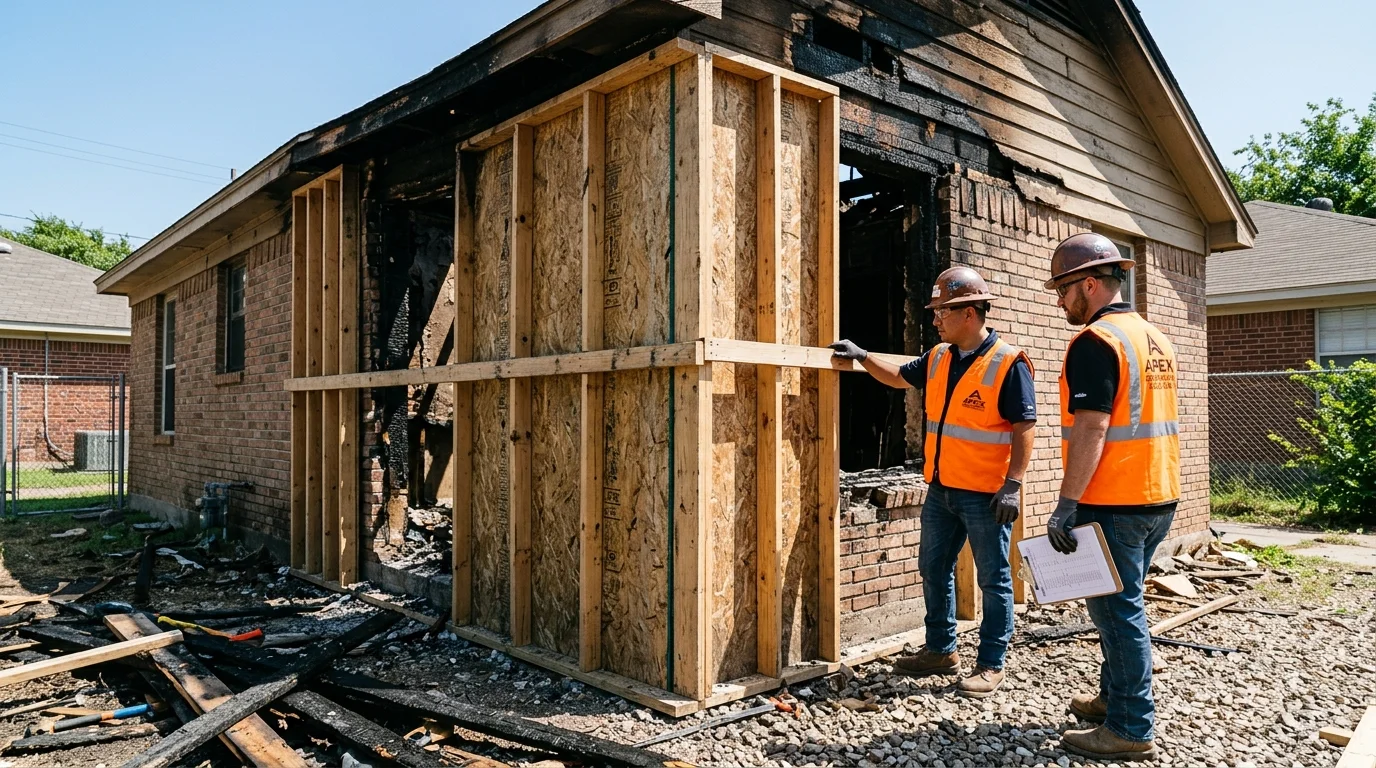
When intense flame impinges on wood framing, baseboards, and structural decking, it undergoes pyrolysis—leaving a layer of porous, blackened carbon known as char. Charred wood is structurally compromised, continuously releases acrid combustion odors, and provides an anchor for stubborn smoke particles. Simply painting over or encapsulating heavily charred timber without proper removal traps odors permanently and violates City of Dallas building safety codes.
Our Dallas restoration specialists deliver precision charred material removal across all 51 Dallas ZIP codes. Using controlled mechanical demolition, reciprocating saws, and specialized scraping equipment, we surgically cut away burned non-structural elements and plane down charred timber to expose clean, sound wood. This critical step prepares remaining structural frameworks for safe load reinforcement, thermal odor sealing, and final contractor rebuilding.
Dallas Debris & Cleanup Dispatch
Heavy-duty equipment & roll-off container mobilization across all 51 Dallas ZIP codes.
What Does Surgical Charred Material Removal Entail?
Removing charred materials requires a disciplined, engineering-conscious approach to distinguish between non-structural elements that must be discarded and load-bearing timber that can be salvaged:
Detailed Char Depth Assessment
Technicians inspect framing members to measure char penetration depth. In standard Southern yellow pine used across North Texas homes, charring deeper than 1/4 inch on nominal 2x4 framing often requires structural replacement or sistering rather than surface scraping.
Demolition of Burned Trim & Baseboards
Scorched interior trim, blackened door jambs, damaged window casings, and charred crown molding are systematically pried off and discarded.
Surgical Stud & Joist Cutting
Non-load-bearing partition studs that are severely burned are cut out cleanly at top and bottom plates without shaking surrounding ceiling structures.
Mechanical Char Planing & Abrasion
On load-bearing timber that retains sufficient structural cross-section, crews mechanically remove the outer carbon layer using rotary planers, carbide wire wheels, and controlled scraping tools.
Subfloor Char Demolition
Blackened plywood or OSB subfloor decking beneath burned carpets or cabinets is cut out along joist centerlines, leaving a clean ledge for future replacement sheeting.
Negative Air Dust Containment
High-efficiency HEPA air filtration machines operate continuously in work zones to capture fine airborne carbon dust generated during cutting and scraping.
Charred Material Removal vs. Structural Rebuilding
To keep your restoration project efficient and cost-effective, our teams maintain clear boundaries between demolition extraction and physical carpentry:
Charred Material Removal (Scope of This Page)
Controlled extraction and cutting of burned carbon layers and scorched framing.
Sawing, scraping, chiseling, and discarding non-salvageable charred wood elements.
Exposing sound, clean framing surfaces ready for engineering inspection.
Structural Rebuilding (Block 5 General Contractor Scope)
Installation of new structural timber, sistering engineered joists, and truss repairs.
Securing City of Dallas Chapter 53 framing permits and final code inspections.
Full carpentry rebuilding to restore engineered load capacities.
Why Charred Wood Cannot Simply Be Painted Over
Attempting to spray pigmented shellac or clear sealants directly over charred framing creates severe long-term complications:
Permanent Odor Trapping & Summer Off-Gassing
Porous carbon char acts as an odor reservoir. When North Texas summer temperatures exceed 100°F and humidity rises, heat forces volatile organic compounds (VOCs) through standard paint coatings, causing smoke odors to reappear years later.
Structural Concealment Hazards
Coating charred framing prevents city inspectors and structural engineers from verifying whether load-bearing studs retain adequate structural wood fiber beneath the black layer.
Impaired Fastener Grip
Nails, framing screws, and structural metal ties cannot achieve proper holding capacity when driven through spongy, brittle carbon char into wood framing.
Poor Sealant Adhesion
Encapsulant paints require clean, dry wood pores to bond properly. Applying coatings over loose, flaky char results in peeling, bubbling, and premature failure.
Frequently Asked Questions
How do you determine whether a charred stud must be removed or can be scraped?
We evaluate the remaining unburned cross-section of the wood member. If the char depth has consumed more than a critical percentage of the stud's load-bearing capacity—typically exceeding 1/4 inch on standard wall framing—the member is marked for cutout and subsequent structural sistering by a general contractor.
Can charred roof rafters and trusses be repaired without total replacement?
Yes, in many cases. If the charring is superficial and the engineered truss gusset plates have not been warped by heat, mechanical scraping followed by structural sistering can restore the roof's engineered load capacity without requiring complete roof removal.
What happens to the fine black dust produced during char scraping?
We operate commercial HEPA air scrubbers and attach vacuum shrouds directly to scraping tools. This captures over 99.97% of airborne carbon dust particles at the source, preventing fine black soot from contaminating clean sections of your property.
Does insurance cover the complete removal of charred framing?
Yes. Insurance policies written for Texas properties generally cover the complete removal of all fire-damaged and structurally compromised framing required to restore the property to pre-loss building code compliance.
Related Debris, Ash & Cleanup Solutions
Overview of comprehensive post-fire cleanup services in Dallas.
Bulk extraction of collapsed drywall, insulation, and fire rubble.
HEPA vacuuming and deep caustic particulate extraction.
Turnkey structural framing sistering and general contractor reconstruction.
Available Across All 51 Dallas ZIP Codes
Our emergency response and restoration specialists deploy 24/7 across every Dallas County neighborhood. Select your local district below for localized response details:
Fire Recovery & Technical Insights
What to Do in the First 24 Hours After a House Fire
Critical safety, insurance notification, and board-up steps once fire officials release the scene.
Understanding Smoke and Soot Types: Wet, Dry & Protein
Why household cleaning smears acidic soot and how chemical counteractants stop etching.
Navigating Fire Damage Insurance Claims
How Xactimate line-item estimates, ACV vs RCV, and Texas building ordinance coverage work.