Garage Smoke Odor Treatment in Dallas, TX
Smoke produced by a garage fire carries one of the most pungent, toxic, and persistent odor signatures known to structural restoration. When gasoline, diesel fuel, motor oil, synthetic tires, plastic storage bins, and automotive chemicals burn, they produce thick clouds of heavy polycyclic aromatic hydrocarbons (PAHs) that penetrate unpainted framing lumber and concrete.
Our Dallas garage smoke odor neutralization specialists deploy industrial cryogenic dry ice blasting, high-output solvent thermal fogging, and heavy-build pigmented shellac vapor-barrier sealing to eradicate petroleum smoke odors permanently at the molecular level across Dallas County.
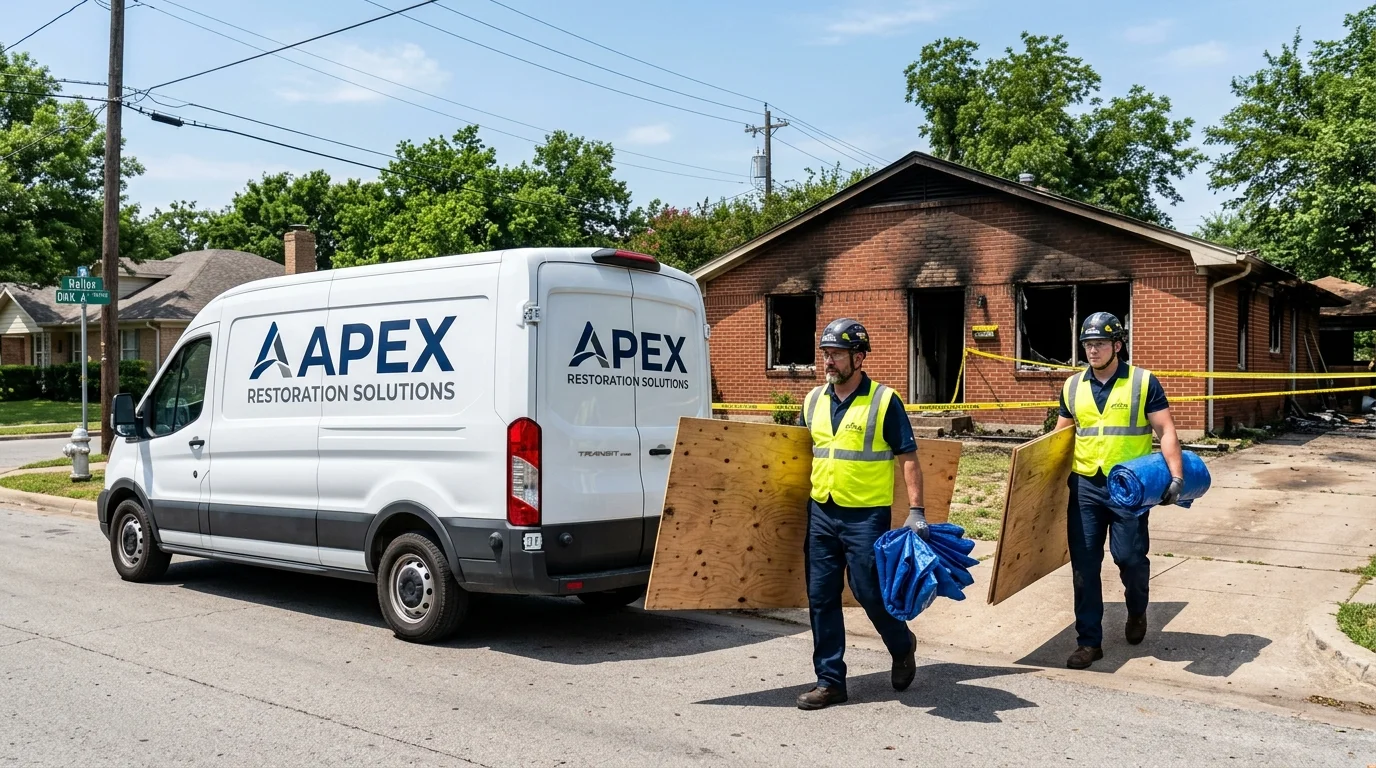
Dallas Garage Fire & Structural Firewall Repair Desk
IRC R302.6 1-hour firewall carpenters, dry ice blasting crews & overhead door technicians deployed across Dallas County.
Three-Phase Odor Elimination for Unsealed Garage Substrates
Because petroleum soot penetrates raw wood and porous concrete up to 1/8-inch deep, superficial surface wiping cannot eliminate the smell:
1. Cryogenic Dry Ice (CO2) Blasting
Propels -109°F dry ice pellets at supersonic speeds against charred wood and concrete, fracturing brittle soot away with zero secondary abrasive waste.
2. Solvent Thermal Fogging
Atomizes solvent-based odor counteractants into sub-micron droplets that drift through framing cavities and masonry pores to bond with petroleum molecules.
3. Pigmented Shellac Vapor-Barrier Encapsulation
Two heavy coats of white-pigmented pure shellac primer seal exposed wall framing, ceiling joists, and roof decking, creating an impenetrable barrier.
Frequently Asked Questions
Can concrete garage walls be sealed to lock in smoke odors?
Yes. After deep hot-water pressure degreasing and dry ice blasting, concrete foundation stem walls and masonry surfaces can be sealed with commercial acrylic masonry sealers or epoxy barrier coatings that block vapor transmission.
Why shouldn't I use water-based latex paint to cover smoke stains in a garage?
Water-based latex paints dissolve the soot compounds, causing black stains and oily odors to bleed directly through the new paint film within days. Only alcohol-based shellac or heavy oil-based stain-blocking primers provide a permanent vapor barrier.
Is ozone treatment safe to use in a garage with stored vehicles or rubber items?
Ozone gas is an aggressive oxidizer that degrades natural rubber, neoprene gaskets, electrical wire insulation, and vehicle belts if applied in excessive concentrations. We prioritize hydroxyl radical generation and thermal fogging to protect sensitive rubber components.
Related Garage Fire & Structural Solutions
Available Across All 51 Dallas ZIP Codes
Our emergency response and restoration specialists deploy 24/7 across every Dallas County neighborhood. Select your local district below for localized response details:
Fire Recovery & Technical Insights
What to Do in the First 24 Hours After a House Fire
Critical safety, insurance notification, and board-up steps once fire officials release the scene.
Understanding Smoke and Soot Types: Wet, Dry & Protein
Why household cleaning smears acidic soot and how chemical counteractants stop etching.
Navigating Fire Damage Insurance Claims
How Xactimate line-item estimates, ACV vs RCV, and Texas building ordinance coverage work.