Garage Fire Cleanup in Dallas, TX
Cleaning a garage after a fire requires specialized hazardous material protocols that go far beyond standard residential debris removal. Garages routinely store volatile fuels, lawn care chemicals, motor oils, lead-acid batteries, and high-energy lithium-ion battery packs for electric vehicles and power tools.
Our Dallas garage fire cleanup division delivers hazardous chemical stabilization, burned vehicle and equipment extraction, concrete pressure degreasing, and legal waste hauling across all 51 Dallas ZIP codes.
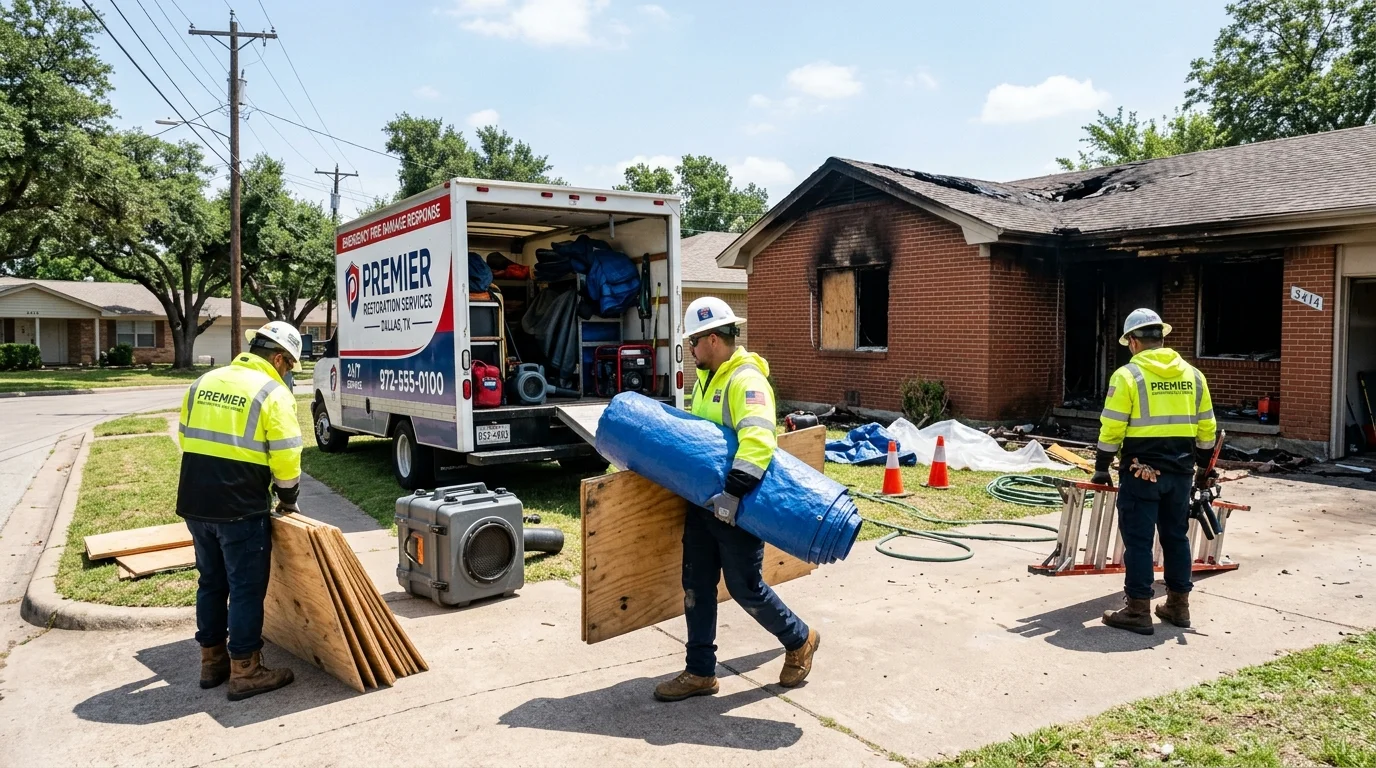
Dallas Garage Fire & Structural Firewall Repair Desk
IRC R302.6 1-hour firewall carpenters, dry ice blasting crews & overhead door technicians deployed across Dallas County.
Hazardous Waste Protocol & Debris Extraction Sequence
Our certified technicians manage garage cleanup using strict environmental and life-safety protocols:
1. Hazardous Chemical Isolation
Ruptured gasoline cans, paint solvents, and lawn chemicals are stabilized and packed into DOT-approved hazardous waste salvage drums.
2. Burned Vehicle & Equipment Extraction
Wrecker extraction of burned vehicles with oil-absorbent containment booms capturing transmission fluids, fuel runoff, and battery acid.
3. Tool & Metal Storage Disposal
Charred metal shelving and non-salvageable structural debris are loaded into heavy-duty roll-off containers and hauled per TCEQ regulations.
4. Concrete Slab Hot Water Degreasing
Walk-behind surface cleaners blast 200°F hot water at 3,500 PSI with integrated vacuum recovery hoods, preventing chemical runoff into city storm drains.
Frequently Asked Questions
How do you remove oil and gas soot stains permanently from a garage floor?
We utilize industrial bio-enzyme digesters, solvent-based degreasers, and rotary surface hot-water extractors operating at 200°F and 3,500 PSI. For deep burns, diamond grinding machines shave away the contaminated concrete layer.
Can burned metal tools and toolboxes be restored?
High-value steel tools exposed to dry soot can often be restored. Technicians submerge items in ultrasonic solvent tanks to strip carbon residues, dry them, and apply corrosion-inhibitor oils to prevent rust.
What permits or disposal manifests are required for garage fire debris?
The TCEQ and local Dallas ordinances require manifest tracking for hazardous household waste, including paints, pesticides, motor oils, and vehicle batteries. Our company handles all waste profiling and manifest paperwork.
Related Garage Fire & Structural Solutions
Available Across All 51 Dallas ZIP Codes
Our emergency response and restoration specialists deploy 24/7 across every Dallas County neighborhood. Select your local district below for localized response details:
Fire Recovery & Technical Insights
What to Do in the First 24 Hours After a House Fire
Critical safety, insurance notification, and board-up steps once fire officials release the scene.
Understanding Smoke and Soot Types: Wet, Dry & Protein
Why household cleaning smears acidic soot and how chemical counteractants stop etching.
Navigating Fire Damage Insurance Claims
How Xactimate line-item estimates, ACV vs RCV, and Texas building ordinance coverage work.