Tile Floor Fire Damage Repair in Dallas, TX
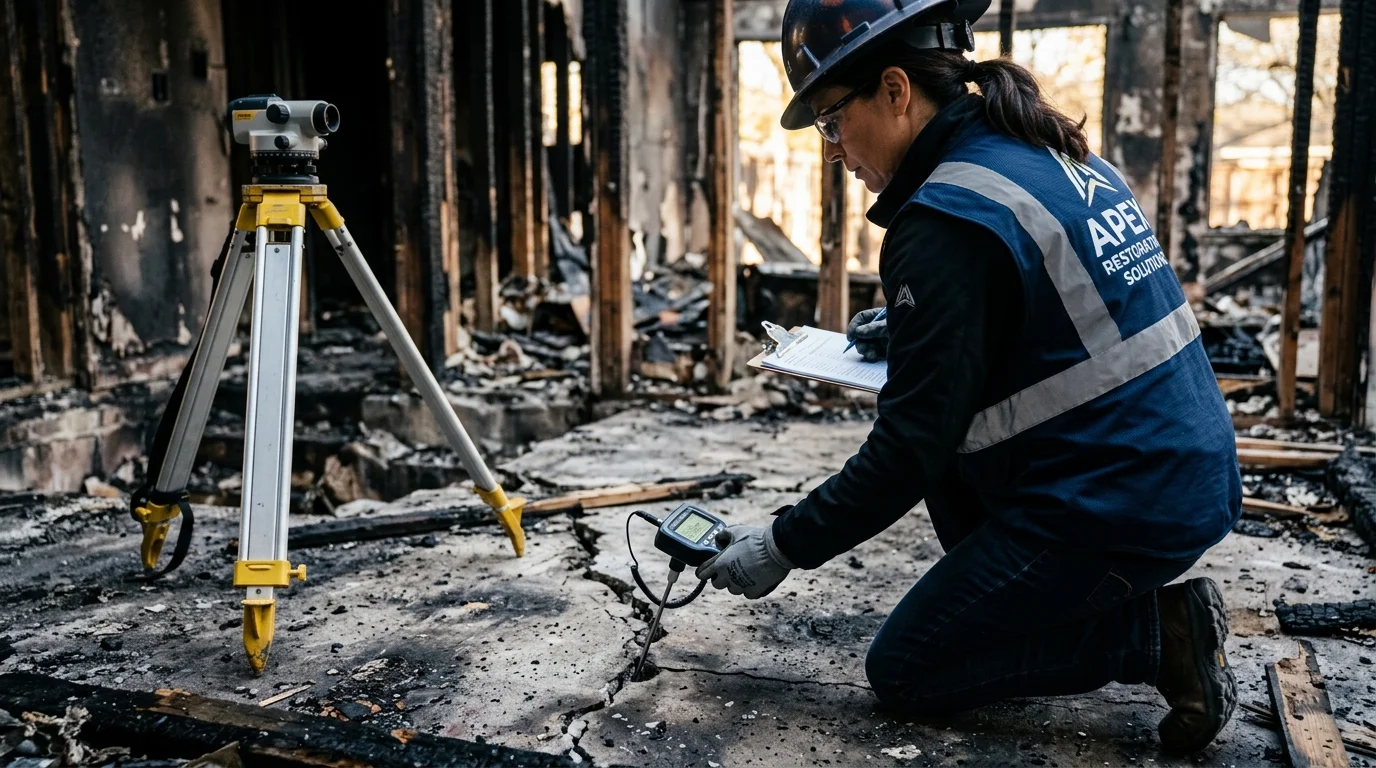
While ceramic, porcelain, and natural stone tiles are inherently non-combustible materials, structural fires inflict severe forensic and mechanical destruction on tiled floor assemblies. As room temperatures climb past 800°F (427°C), rapid thermal expansion causes tiles to expand at a radically different rate than the underlying concrete slab or cement backer board. This differential movement breaks the crystalline bond of thin-set mortar, resulting in loose, 'drummy,' or hollow-sounding tiles. Rapid temperature shifts—especially when cold firefighting water hits superheated tile surfaces—trigger violent thermal shock, cracking glazed surfaces and shattering stone slabs.
Furthermore, porous cementitious grout lines absorb oily combustion resins, acidic carbon soot, and dirty firefighting runoff, turning bright grout dark, discolored, and chemically degraded. Our Dallas tile and stone restoration division provides comprehensive tile floor fire damage repair across Dallas County, performing acoustic sounding, surgical hollow tile extraction, substrate crack isolation, color-matched tile setting, and ultrasonic grout restoration.
Dallas Flooring Restoration & Drying Desk
Hardwood drying technicians, tile specialists & subfloor carpenters deployed across Dallas County.
Failure Signatures in Ceramic, Porcelain & Stone Floors
Tile fire damage encompasses multiple visible and hidden failure modes:
Mortar Bed Debonding (Hollow Tiles)
Heat dehydrates thin-set mortar while thermal expansion causes tiles to sheer away. Tapping reveals hollow voids that crack under normal foot traffic.
Thermal Shock Fracturing
Cold water sprayed on heated floors creates surface tension, causing spiderweb micro-fissuring across glazed ceramic and natural stone.
Acidic Soot Impregnation in Grout
Cement-based grout absorbs acidic combustion residues and dirty water, creating deep stains and persistent smoke odors.
Sub-Tile Efflorescence Pressure
Saturated concrete slabs beneath tiles force water upward through grout joints, depositing white mineral salts and blowing out soft grout.
Technical Tile Restoration & Rebonding Protocols
Our tile artisans restore solid footing and immaculate grout lines:
Acoustic Sounding & Precision Thin-Set Rebedding
Technicians tap every tile with calibrated sounding rods to map bonded versus debonded tiles, cataloging cracked units for replacement.
Cracked tiles are extracted with oscillating diamond blades without chipping sound neighbors, and new tiles are set in polymer-modified thin-set mortar with 95%+ coverage.
Crack Isolation Membranes & Grout Restoration
Continuous elastomeric crack isolation membranes (Schluter Ditra) are applied over slab cracks to prevent reflective cracking into new tile.
Undamaged grout is deep-cleaned with alkaline soot-lifting detergents under 1,000 PSI high-temperature extraction, sealed with fluoropolymer sealers.
Frequently Asked Questions
Can hollow-sounding tiles be repaired without tearing up the whole floor?
Yes. If the tiles themselves are uncracked, our technicians can utilize precision drill-and-fill structural epoxy injection. Tiny 1/16-inch holes are drilled into the grout joints, and low-viscosity structural tile adhesive is injected beneath the tiles, rebonding them solidly to the concrete slab without removing a single tile.
How do you match tiles that may have been discontinued years ago?
We maintain relationships with national architectural tile distributors and specialty salvagers. If an exact discontinued tile match cannot be found for a localized repair, we work with your insurance adjuster under Texas insurance standards to replace the entire contiguous room tile floor to maintain architectural consistency.
Can soot stains be completely removed from porous grout lines?
In the majority of cases, high-temperature self-contained truck-mounted extraction combined with enzymatic soot-lifting formulas completely clears discoloration. For deeply etched grout, we apply specialized pigmented epoxy grout colorants that permanently seal and recolor the grout joints to a fresh, uniform finish.
How long before I can walk on repaired tile floors?
Floors repaired with fast-setting polymer-modified thin-set mortars can typically accommodate light foot traffic within 4 to 6 hours, while standard installations require 24 hours for mortar curing before grouting and normal usage.
Related Flooring & Subfloor Solutions
Overview of floor fire damage restoration in Dallas.
Solid oak cupping restoration, board replacement, and refinishing.
3/4" tongue-and-groove plywood replacement and leveling.
Swollen core removal, vapor barrier renewal, and plank restoration.
Available Across All 51 Dallas ZIP Codes
Our emergency response and restoration specialists deploy 24/7 across every Dallas County neighborhood. Select your local district below for localized response details:
Fire Recovery & Technical Insights
What to Do in the First 24 Hours After a House Fire
Critical safety, insurance notification, and board-up steps once fire officials release the scene.
Understanding Smoke and Soot Types: Wet, Dry & Protein
Why household cleaning smears acidic soot and how chemical counteractants stop etching.
Navigating Fire Damage Insurance Claims
How Xactimate line-item estimates, ACV vs RCV, and Texas building ordinance coverage work.