Fire Insurance Claim Assistance in Dallas, TX
Navigating the aftermath of a property fire requires understanding the intricate legal language, coverage boundaries, and strict filing deadlines embedded within Texas insurance policies. Insurance policies are dense legal contracts containing complex endorsements, depreciation formulas, sub-limits, and exclusions that can easily overwhelm property owners. Without experienced guidance, homeowners and commercial operators routinely leave critical coverage categories uncollected, forfeit living expense reimbursements, or face claim denials based on procedural technicalities.
Our Dallas fire insurance claim assistance team specializes in deciphering complex policy terms, documenting comprehensive physical damages, and communicating with carrier adjusters on your behalf. Serving residential homeowners and commercial enterprises across all 51 Dallas ZIP codes, our seasoned claims specialists analyze your declarations page, prepare formal sworn Proof of Loss statements, document Additional Living Expenses (ALE), and hold carriers accountable under Texas Insurance Code standards to ensure you receive the full benefits entitled under your policy.
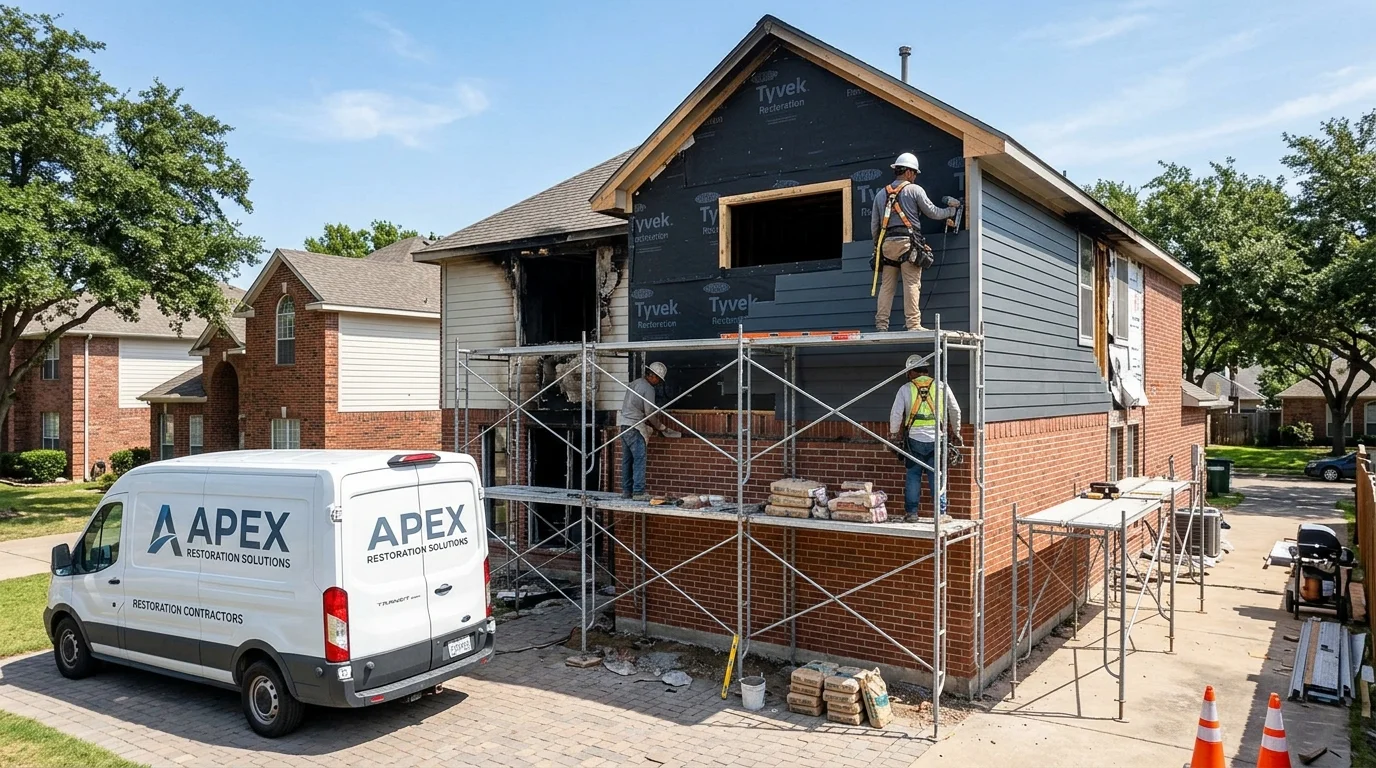
Dallas Fire Insurance Claims Navigation & Advocacy Desk
Forensic insurance estimators, Xactimate unit-cost specialists & licensed adjuster coordinators serving policyholders across Dallas County.
Policy Coverage Breakdown & Endorsement Navigation
Understanding how your policy divides coverage categories is essential to maximizing claim recovery:
Coverage A (Dwelling / Building)
Covers the physical structure—including framing, foundation, roof, subfloors, and attached fixtures. We ensure all structural tear-out, odor encapsulation, and finish reconstruction are included.
Coverage B (Other Structures)
Applies to detached garages, workshops, perimeter fences, retaining walls, and detached gazebos damaged by radiant heat, embers, or fallen trees.
Coverage C (Personal / Business Property)
Pays for cleaning, decontaminating, or replacing personal belongings, clothing, electronics, and furnishings. We structure detailed line-item loss schedules to prevent arbitrary depreciation deductions.
Coverage D (Loss of Use / ALE & Business Interruption)
Reimburses displaced families for hotels, extended rental homes, pet boarding, and extra living costs. For commercial businesses, this coverage extends to business interruption and extra operating expenses.
Ordinance or Law Endorsement
Pays the additional construction costs required to bring damaged areas into compliance with current City of Dallas municipal building, electrical, and plumbing codes.
Sworn Proof of Loss & Texas Statutory Deadlines
Insurance policies contain strict contractual conditions that policyholders must fulfill to maintain coverage validity:
Sworn Proof of Loss Filing
Submitting formal, notarized Sworn Statements in Proof of Loss within contractual 60-to-90-day deadlines, backed by detailed engineering and restoration estimates.
Depreciation Holdback Recovery
Tracking the release of withheld depreciation by submitting completed general contractor milestone invoices to carriers to secure final holdback disbursements.
Texas Prompt Payment Oversight
Holding carriers strictly to Texas Insurance Code Chapter 542 deadlines: 15 days to acknowledge, 15 business days to decide, and 5 business days to pay.
Frequently Asked Questions
What should I do if my insurance company delays processing my fire claim in Dallas?
Under Texas Insurance Code Chapter 542, insurance companies must adhere to strict prompt-payment timelines. If your carrier fails to meet statutory deadlines, our team helps draft formal written inquiries referencing Chapter 542 requirements. If an insurer unjustifiably delays payment after receiving complete documentation, Texas law allows policyholders to collect statutory interest penalties plus reasonable attorney fees.
What receipts must I keep to receive Additional Living Expense (ALE) reimbursement?
You should retain every receipt for expenses incurred above your normal day-to-day living costs while displaced from your home. This includes short-term lodging or apartment leases, security deposits, utility setup fees, laundry services, pet boarding, storage unit fees, and all food receipts (supermarket and restaurant). We organize and categorize your living expense receipts directly into monthly carrier-formatted claim vouchers.
How is depreciation calculated on fire-damaged building materials?
Insurance adjusters apply depreciation based on the age, condition, and expected lifespan of each building component. For example, a 15-year-old architectural shingle roof will carry higher depreciation than 2-year-old interior drywall. However, adjusters frequently apply excessive, automated 'across-the-board' depreciation percentages. We audit adjuster calculations to ensure depreciation is fair, reasonable, and fully recoverable upon completion of repairs.
Related Fire Insurance & Claims Solutions
Return to parent insurance claims directory.
Carrier-grade Xactimate line-item estimation and supplements.
Room-by-room contents documentation and total-loss logs.
Joint on-site scoping and settlement advocacy.
Turnkey general contracting for insurance-covered repairs.
Available Across All 51 Dallas ZIP Codes
Our emergency response and restoration specialists deploy 24/7 across every Dallas County neighborhood. Select your local district below for localized response details:
Fire Recovery & Technical Insights
What to Do in the First 24 Hours After a House Fire
Critical safety, insurance notification, and board-up steps once fire officials release the scene.
Understanding Smoke and Soot Types: Wet, Dry & Protein
Why household cleaning smears acidic soot and how chemical counteractants stop etching.
Navigating Fire Damage Insurance Claims
How Xactimate line-item estimates, ACV vs RCV, and Texas building ordinance coverage work.