Fire Damage Insurance Claim Help in Dallas, TX
Filing an insurance claim after a structure fire in Dallas is one of the most demanding administrative processes a property owner will ever face. While families and business operators are grappling with displacement, property loss, and operational paralysis, insurance carriers require hundreds of pages of itemized documentation, sworn proofs of loss, detailed reconstruction estimates, and exhaustive contents inventories. Without seasoned technical support, policyholders frequently face delayed approvals, disputed scopes of work, and undervalued settlement offers that fail to cover the true cost of complete structural reconstruction.
Our Dallas fire damage insurance support division provides non-physical claims navigation, forensic documentation, carrier-grade Xactimate estimation, and on-site adjuster advocacy across all 51 Dallas ZIP codes. Operating in full compliance with the Texas Department of Insurance (TDI) and the Texas Insurance Code, our claims specialists work directly with your insurer's adjusters, engineers, and risk managers to ensure every square inch of structural damage, smoke penetration, and personal property loss is fully documented and accounted for.
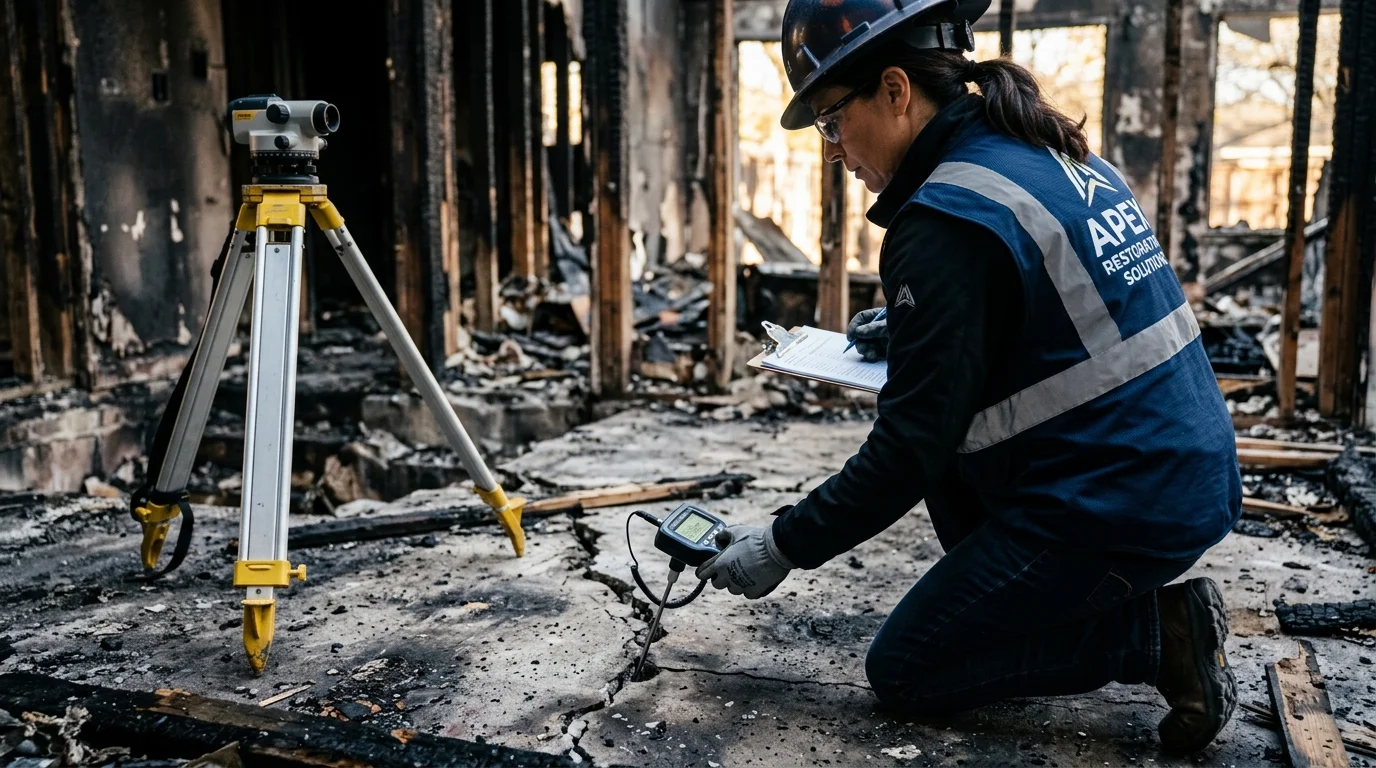
Dallas Fire Insurance Claims Navigation & Advocacy Desk
Forensic insurance estimators, Xactimate unit-cost specialists & licensed adjuster coordinators serving policyholders across Dallas County.
Scope Exclusivity: Non-Physical Insurance Navigation
Block 14 serves as the dedicated administrative and insurance advocacy authority across the website:
Non-Physical Service Focus
Governing strictly claims navigation, carrier communications, inventory scheduling, Xactimate estimating, and adjuster coordination. Physical tear-out and reconstruction are managed under dedicated trade blocks.
Separation from Forensic Inspection
While Block 2 provides technical engineering inspections, Block 14 translates physical inspection data into carrier-approved insurance line items and contractual Proof of Loss submittals.
Texas Insurance Code Alignment
Assisting policyholders under Texas Insurance Code Chapter 542 (Prompt Payment of Claims Act), ensuring carriers adhere to statutory deadlines for claim acknowledgment, investigation, acceptance, and payment.
Complete Claim Transparency
Bridging the communication gap between property owners and insurance adjusters with carrier-preferred unit-cost data, eliminating administrative roadblocks.
Explore Our Insurance Claims Divisions
Navigate our complete spectrum of fire insurance claim assistance services across Dallas County:
Insurance Claim Assistance
Complete policy coverage breakdown, Proof of Loss filing, ALE navigation, and carrier negotiation.
Fire Damage Cost Estimation
Carrier-grade Xactimate line-item estimates, Dallas metro localized unit pricing, and supplemental filings.
Fire Loss Inventory Services
Room-by-room personal property cataloging, non-salvageable total loss logs, and digital photo records.
Insurance Adjuster Coordination
Joint on-site scoping walkthroughs, scope discrepancy resolution, and accelerated claim settlements.
The Dallas Fire Insurance Claim Timeline
Navigating an insurance claim in Texas follows a structured regulatory and technical sequence:
1. Policy Review & Loss Notification
Analyzing declarations pages, endorsements, deductibles, and Additional Living Expense (ALE) limits, followed by formal carrier notice.
2. On-Site Joint Adjuster Walkthrough
Walking the fire loss alongside the carrier's field adjuster to ensure all structural damage, hidden smoke cavities, and suppression water are documented upfront.
3. Line-Item Xactimate Scope Submission
Compiling and submitting a comprehensive, multi-trade reconstruction estimate using localized Dallas County labor and material unit costs.
4. Depreciation Recovery & Supplemental Reconciliation
Resolving scope discrepancies, filing supplements for hidden damages discovered during selective demolition, and securing holdback depreciation releases.
Frequently Asked Questions
What rights do policyholders have under the Texas Prompt Payment of Claims Act?
Under Texas Insurance Code Chapter 542, insurance companies must adhere to strict deadlines: the carrier must acknowledge your claim, begin its investigation, and request all necessary documentation within 15 days of receiving notice. Once you submit all requested documentation, the carrier has 15 business days to accept or reject your claim in writing. Upon accepting your claim, the insurer must issue payment within 5 business days. If a carrier fails to comply with these statutory deadlines, Texas law provides for statutory interest penalties plus reasonable attorney fees.
What is the difference between Actual Cash Value (ACV) and Replacement Cost Value (RCV)?
Replacement Cost Value (RCV) represents the actual cost to repair or replace damaged property with new materials of like kind and quality at current local market prices, without deduction for age or wear. Actual Cash Value (ACV) represents the depreciated value of the property at the moment before the fire occurred (RCV minus depreciation). Most standard replacement policies initially pay the ACV amount; the withheld depreciation (holdback) is released once the repairs are completed and paid invoices are submitted.
Should I accept the first settlement check offered by my insurance adjuster?
In most cases, an initial check issued by your insurance adjuster is an advance or an Actual Cash Value payment based on their initial visual estimate. You can generally deposit this check to begin recovery operations without forfeiting your right to file supplements for additional damages. However, never sign a document that includes a 'full and final release' or release of future claims until our team has conducted a comprehensive line-item scope audit to ensure all hidden fire, smoke, and code-upgrade costs are covered.
Related Fire Insurance & Claims Solutions
Policy analysis, Proof of Loss filing, and ALE reimbursement.
Carrier-grade Xactimate line-item estimation and supplements.
Detailed personal property cataloging and total-loss logs.
Joint on-site scoping and claim settlement advocacy.
Whole-structure forensic and technical damage assessment.
General contractor restoration adhering to approved scopes.
Available Across All 51 Dallas ZIP Codes
Our emergency response and restoration specialists deploy 24/7 across every Dallas County neighborhood. Select your local district below for localized response details:
Fire Recovery & Technical Insights
What to Do in the First 24 Hours After a House Fire
Critical safety, insurance notification, and board-up steps once fire officials release the scene.
Understanding Smoke and Soot Types: Wet, Dry & Protein
Why household cleaning smears acidic soot and how chemical counteractants stop etching.
Navigating Fire Damage Insurance Claims
How Xactimate line-item estimates, ACV vs RCV, and Texas building ordinance coverage work.