Electrical Fire Damage Inspection in Dallas, TX
Re-energizing an electrical system after a structure fire without a certified diagnostic inspection is one of the leading causes of secondary rekindling and catastrophic arc flash explosions. Even when a fire originates far from your breaker panel, radiant heat exceeding 450 degrees Fahrenheit melts thermoplastic Romex insulation, degrades circuit breaker trip mechanisms, and vaporizes internal copper connections inside wall framing.
Our specialized electrical fire damage inspection provides property owners, facility managers, and insurance carriers across Dallas County with exhaustive safety evaluations. Working in close coordination with Oncor Electric Delivery and local municipal building officials, our certified evaluators systematically map circuit faults, detect hidden insulation breakdown, and determine which electrical branches can be safely certified for power restoration.
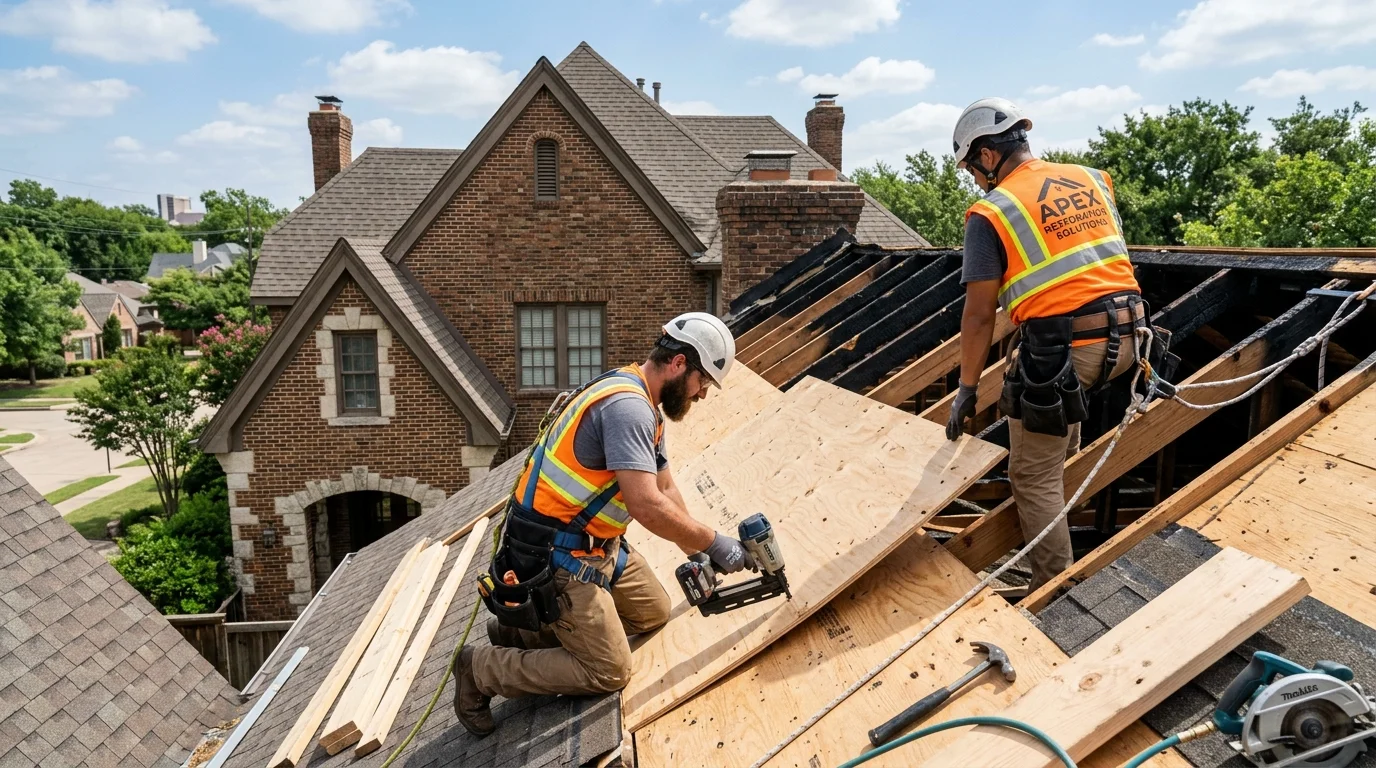
Dallas Certified Inspection Desk
Technical field evaluators ready for on-site assessment across all 51 Dallas ZIP codes.
What Does Our Post-Fire Electrical Inspection Evaluate?
Electrical systems suffer both direct thermal trauma and corrosive soot degradation. Our technical inspection encompasses four critical components:
Service Entrance and Main Distribution Panels
We examine meter bases, service masts, panel bus bars, and main breakers for soot bridging, thermal warping, and water infiltration from firefighting streams.
Branch Circuit Wiring and Conduit Runs
We test non-metallic sheathed cable (NM-B), armored cable (BX), and rigid metal conduit for melted dielectric insulation, ground faults, and copper embrittlement.
Receptacles, Switches, and Junction Boxes
We inspect metal and plastic rough-in boxes for soot accumulation, arcing scorch marks, and melted terminal screws inside wall cavities.
Hardwired Appliances and Mechanical Feeds
We test direct-wired HVAC compressors, water heaters, and commercial equipment feeds for compromised grounding and thermal shorts.
Advanced Diagnostic Methods for Electrical Safety
Surface appearances never tell the full story of electrical safety. Our technical inspectors employ advanced instrumentation to evaluate energized and de-energized systems:
Megohmmeter (Megger) Insulation Resistance Testing
Standard multimeters cannot detect micro-fissures in heat-damaged wire insulation. We apply high-voltage, low-current megohmmeter testing across branch circuits to measure insulation resistance in megohms.
Any drop below National Electrical Code (NEC) minimum thresholds indicates dangerous insulation breakdown that could cause future arcing inside concealed walls.
Thermal Imaging Circuit Load Scans
Upon temporary re-energizing of verified branch circuits, our inspectors utilize calibrated FLIR infrared cameras to inspect breaker connections, bus bars, and splice points under load.
Thermal anomalies highlight loose connections, resistive heating, and failing breakers before they can spark.
Soot Conductivity and Corrosion Analysis
Smoke residues containing ionized chlorides and carbon particles are electrically conductive. When soot settles across breaker bus bars or terminal strips, it creates conductive bridges that bypass normal breaker trips.
We test panel components for soot conductivity and chemical corrosion.
The Hazards of Premature Power Restoration
Attempting to flip breakers back on without an official electrical clearance creates extreme risks:
Secondary Structure Rekindling
Cracked wire insulation hidden inside insulated attic spaces can arc against metal lath or framing studs, igniting dry cellulose insulation hours after power is restored.
Electrocution Hazards
Firefighting water saturates floor cavities and wall studs, conducting electrical currents from compromised wiring directly to damp floors or metal framing.
Electronics and Appliance Burnout
Unstable neutral connections damaged by heat send irregular voltage surges (up to 240 volts) through standard 120-volt circuits, destroying sensitive computers, televisions, and HVAC control boards.
Dallas Municipal Citation
The City of Dallas requires a formal electrical inspection and permit release before Oncor Electric Delivery is authorized to reset an electrical meter pulled after a fire incident.
Our 4-Stage Electrical Inspection Protocol
Our evaluators adhere to National Fire Protection Association (NFPA 70E) safety guidelines throughout every inspection:
1. Utility Isolation & Safe De-Energization Check
We confirm the main meter is locked out, test for zero voltage, and verify that auxiliary solar or generator feeds are disconnected.
2. Service Panel & Distribution Teardown Audit
We remove panel deadfront covers to inspect breaker lugs, grounding bars, and neutral bonds for thermal oxidation or conductive soot deposits.
3. Circuit-by-Circuit Megger Insulation Testing
Every branch circuit is disconnected and tested to verify conductor-to-conductor and conductor-to-ground insulation integrity.
4. Safety Certification & Municipal Permitting Report
We produce a stamped circuit safety inventory categorizing lines as safe for reconnection, repairable, or requiring total rewiring for Dallas city inspectors and Oncor.
Frequently Asked Questions
Why did Oncor pull my electric meter after the fire?
Oncor Electric Delivery and Dallas Fire-Rescue automatically remove or lock electric meters following a fire to protect firefighters and property occupants from electrocution and secondary electrical ignition. The meter cannot be legally reinstalled until a licensed electrical inspection confirms the service entrance is safe and the City of Dallas issues an electrical reconnect release.
Can water from fire hoses ruin electrical panels that were never touched by flames?
Yes. Firefighting water running down internal wall cavities frequently enters electrical panels and conduit pipes. Water introduces minerals and corrosive soot directly into breaker mechanisms, causing rust, internal spring failure, and terminal corrosion that permanently damages circuit breakers.
What is the difference between this inspection and physical electrical rewiring?
This inspection is a diagnostic forensic assessment that tests circuits, measures insulation resistance, identifies origin-point hazards, and provides documentation for permits and insurance adjusters. Electrical rewiring and panel repairs represent the physical replacement of wiring, outlets, and panel hardware based on our inspection findings.
Do insurance adjusters require an electrical inspection before approving full rewiring?
Yes. Insurance adjusters require objective diagnostic proof, such as Megger insulation resistance logs and photographic evidence of internal wire degradation, to approve full or partial home rewiring rather than simple cosmetic outlet replacements.
Related Inspection & Assessment Solutions
Return to the parent assessment and pre-work inspection hub.
Learn how infrared scans identify hidden electrical resistance hotspots.
Review our framing and load-bearing evaluations.
Explore permanent electrical rewiring and circuit replacement.
Return to the comprehensive Dallas fire damage recovery hub.
Available Across All 51 Dallas ZIP Codes
Our emergency response and restoration specialists deploy 24/7 across every Dallas County neighborhood. Select your local district below for localized response details:
Fire Recovery & Technical Insights
What to Do in the First 24 Hours After a House Fire
Critical safety, insurance notification, and board-up steps once fire officials release the scene.
Understanding Smoke and Soot Types: Wet, Dry & Protein
Why household cleaning smears acidic soot and how chemical counteractants stop etching.
Navigating Fire Damage Insurance Claims
How Xactimate line-item estimates, ACV vs RCV, and Texas building ordinance coverage work.