Electrical Wiring Fire Damage Restoration in Dallas, TX
When an electrical fire breaks out behind the walls or ceilings of a Dallas property, the damage to hidden branch wiring circuits is frequently far more extensive than what is visible on the surface. Standard non-metallic sheathed cable (Romex) relies on thermoplastic polyvinyl chloride (PVC) jackets and nylon coatings to insulate copper conductors. When exposed to the thermal radiation of a structure fire—where temperatures rapidly exceed 1,000°F—wire insulation bubbles, decomposes, and turns brittle, leaving bare, energized conductors in direct contact with wood studs and metal framing.
Our Dallas wiring fire damage restoration team delivers specialized branch circuit diagnostics, forensic rewiring, and complete electrical safety modernization. Operating under National Electrical Code (NEC) standards and City of Dallas electrical amendments, our licensed electrical specialists locate heat-compromised wire runs, safely extract burned Romex cables, perform precision megohmmeter insulation resistance testing on surviving circuits, and pull code-compliant copper branch wiring protected by dual-function Arc-Fault Circuit Interrupter (AFCI) breakers.
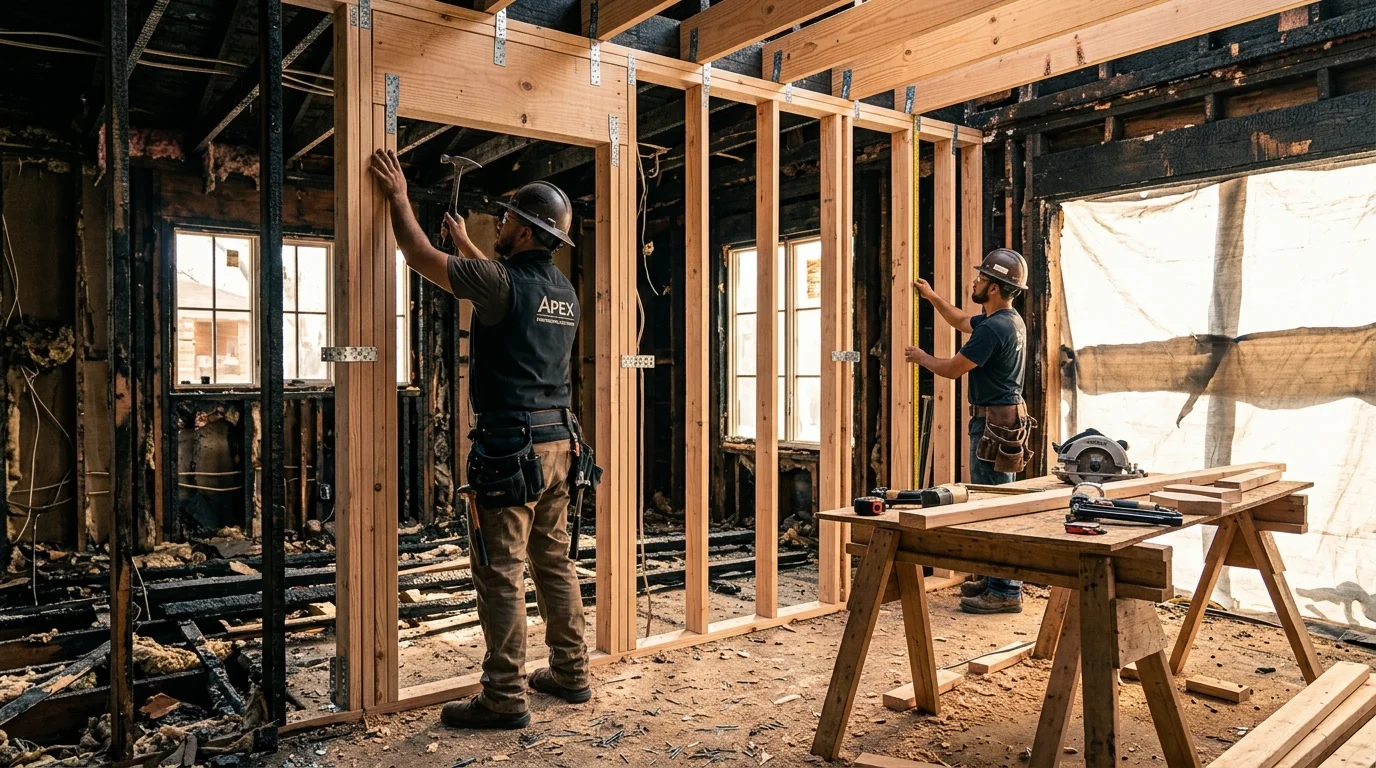
Dallas Master Electrician & Electrical Restoration Desk
Licensed Texas Master Electricians, panel replacement specialists & Oncor meter release coordinators deployed across Dallas County.
Dallas Housing Stock & Wiring Typologies Addressed
Electrical wiring configurations across Dallas vary drastically depending on the construction era of your neighborhood, requiring tailored restoration protocols:
Modern Non-Metallic (Romex) Cable Replacement
Stripping fire-damaged 14/2, 12/2, and 10/3 gauge branch circuits from wall framing bays, replacing warped junction boxes, and pulling 90°C-rated THHN/THWN copper conductors.
Historic Dallas Homes: Knob-and-Tube Remediation
Decommissioning pre-1950s knob-and-tube circuits in Lakewood, M Streets, and Oak Cliff where fire heat degraded fragile cloth insulation, and installing modern grounded circuits.
1960s-1970s Aluminum Branch Wiring Upgrades
Remediating single-strand aluminum wiring found in mid-century North Dallas homes using UL-listed AlumiConn lug connectors or COPALUM crimp pigtails with antioxidant paste.
Technical Diagnostics: Megohmmeter (Megger) Testing
Before any undamaged branch circuit is re-energized after a Dallas fire, our licensed technicians perform rigorous dielectric insulation testing:
High-Voltage Stress Testing
Injecting 500V to 1,000V DC test currents between conductors and to ground using digital megohmmeters to evaluate the molecular integrity of the remaining wire insulation.
Resistance Threshold Standards
Wire runs that fail to demonstrate minimum insulation resistance (at least 50 to 100 megohms) are flagged as heat-compromised and immediately replaced.
Arc-Fault (AFCI) & Ground-Fault (GFCI) Upgrades
Installing modern dual-function AFCI/GFCI breakers on all restored 15-amp and 20-amp branch circuits per City of Dallas electrical code to prevent electrical arcing from ever igniting another fire.
Frequently Asked Questions
Can fire-damaged electrical wiring inside a wall be spliced, or must it be fully replaced?
Under City of Dallas electrical codes and the National Electrical Code (NEC 300.15), electrical splices cannot be concealed inside closed wall cavities without an accessible, permanently exposed junction box. If heat or flames damage a section of branch wiring, our licensed electricians pull a complete new continuous home run from the breaker panel to the first device box, ensuring maximum fire safety and full code compliance.
Why do all repaired electrical circuits require AFCI circuit breakers in Dallas?
The City of Dallas has adopted modern National Electrical Code standards requiring Arc-Fault Circuit Interrupters (AFCI) on virtually all residential 120-volt circuits (including bedrooms, living rooms, kitchens, and hallways). Standard thermal-magnetic breakers only trip when overloaded by too many appliances; AFCI breakers detect microscopic electrical sparking (arcing) inside walls before an electrical arc can reach combustion temperatures and ignite framing.
How do you determine how far along a wire the heat damage traveled?
Heat travels along copper conductors like an electrical coil, often melting plastic insulation feet away from the visible burn zone. We inspect wire runs by removing drywall along the circuit path and utilizing high-voltage megohmmeter insulation resistance testers. If insulation resistance drops below standard thresholds at any point along the conductor, the entire cable run is condemned and replaced.
Related Electrical Fire & Wiring Solutions
Return to parent electrical fire restoration directory.
Breaker box replacements and 200A service entrance rebuilds.
Conductive soot decontamination and outlet cleaning.
Forensic NFPA 921 arc mapping and diagnostic testing.
Wall cavity insulation, drywall hanging, and trim carpentry.
Available Across All 51 Dallas ZIP Codes
Our emergency response and restoration specialists deploy 24/7 across every Dallas County neighborhood. Select your local district below for localized response details:
Fire Recovery & Technical Insights
What to Do in the First 24 Hours After a House Fire
Critical safety, insurance notification, and board-up steps once fire officials release the scene.
Understanding Smoke and Soot Types: Wet, Dry & Protein
Why household cleaning smears acidic soot and how chemical counteractants stop etching.
Navigating Fire Damage Insurance Claims
How Xactimate line-item estimates, ACV vs RCV, and Texas building ordinance coverage work.