Grease Fire Damage Cleanup in Dallas, TX
Grease fires (classified by the NFPA as Class K fires) produce the most chemically stubborn and deceptive residue encountered in structural restoration. When cooking oils or animal fats ignite on a stovetop, temperatures routinely exceed 600°F to 800°F, creating an amber-colored varnish that bakes onto ceilings, range hoods, ceramic tile backsplashes, and stone countertops.
Our Dallas grease fire cleanup technicians deploy specialized bio-enzyme degreasers, solvent-based alkaline emulsifiers, and natural vulcanized rubber chemical sponges to strip polymerized cooking residues without scratching delicate surfaces across Dallas County.
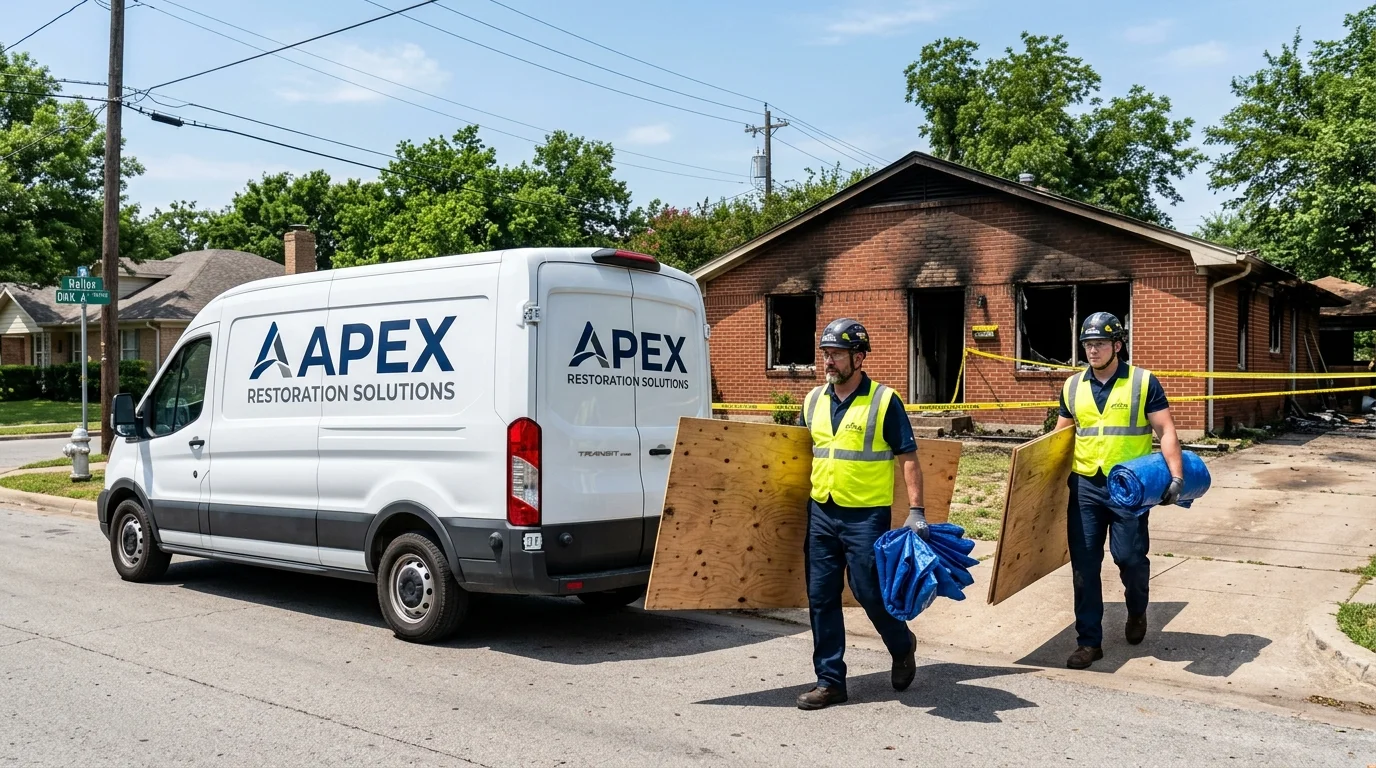
Dallas Kitchen Fire & Protein Soot Decontamination Desk
Class K degreasing crews, cabinetry technicians & appliance testing specialists deployed across Dallas County.
The Chemical Extraction Protocol for Grease Soot
Cleaning high-temperature grease residues requires specific chemical reactions that break lipid bonds:
1. Dry Surface Chem-Sponge Wiping
Dry vulcanized rubber chemical sponges lift loose surface soot particles through electrostatic attraction without smearing the underlying grease film.
2. Alkaline Emulsification Chemistry
High-pH alkaline degreasers containing potassium hydroxide, glycol ethers, and citrus terpenes convert sticky fat deposits into water-soluble soap compounds via saponification.
3. Deep Grout & Porous Stone Decontamination
Specialized poultice pastes containing diatomaceous earth pull embedded cooking oils outward through capillary action from granite, marble, and cementitious grout.
4. Range Hood & Duct System Degreasing
Baffle filters are dismantled, internal blower fans degreased, and duct walls scraped down to bare metal to eliminate secondary fire hazards.
Frequently Asked Questions
Can fire extinguisher powder from a grease fire be safely cleaned?
Yes, but it requires immediate care. Kitchen fire extinguishers typically discharge sodium bicarbonate or potassium bicarbonate powders that become alkaline when mixed with moisture. We perform dry HEPA vacuuming followed by neutral-pH damp wiping to remove chemical residues without etching metal surfaces.
Why do walls look yellow or shiny after a kitchen fire?
The shiny, yellowish discoloration on walls and ceilings is polymerized protein soot. If painted over without proper chemical degreasing and shellac priming, the grease will bleed through new paint layers within months.
How do you clean protein soot out of kitchen pantries and closed cabinets?
Technicians empty all pantry contents, discard soot-exposed non-airtight food items per FDA safety guidelines, contact-clean every interior shelf surface with enzyme degreasers, and deodorize the interior cavities with hydroxyl air processors.
Related Kitchen Fire Restoration Solutions
Overview of Dallas kitchen fire damage restoration services.
Eradicating rancid cooking smoke odors from walls and ceilings.
Restoring solid wood cabinetry and rebuilding charred boxes.
Turnkey kitchen rebuild and City of Dallas permit coordination.
Available Across All 51 Dallas ZIP Codes
Our emergency response and restoration specialists deploy 24/7 across every Dallas County neighborhood. Select your local district below for localized response details:
Fire Recovery & Technical Insights
What to Do in the First 24 Hours After a House Fire
Critical safety, insurance notification, and board-up steps once fire officials release the scene.
Understanding Smoke and Soot Types: Wet, Dry & Protein
Why household cleaning smears acidic soot and how chemical counteractants stop etching.
Navigating Fire Damage Insurance Claims
How Xactimate line-item estimates, ACV vs RCV, and Texas building ordinance coverage work.